Table of Contents
Spinal decompression is a gentle, non-surgical treatment where you lie on a specialized table that applies controlled traction to your spine, easing pressure on the discs and nerves. Each session is relaxing rather than painful, usually lasts around 20 to 30 minutes, and requires no downtime afterward. At Oyler Chiropractic in Reynoldsburg, spinal decompression is used as part of a plan for disc problems, sciatica, and chronic back and neck pain once an exam confirms it is a good fit.
What Spinal Decompression Is
Spinal decompression is a non-surgical way to take pressure off the discs and nerves in your spine. It uses a motorized table that gently stretches and releases the spine in a controlled, repeating pattern.
The goal is to create a small amount of negative pressure within a targeted disc. That change can help take pressure off a compressed nerve and encourage a better environment for the disc to recover.
Why It Is Used
Decompression is most often used for disc-related problems. That includes herniated and bulging discs, degenerative disc changes, and the nerve pain that can come with them, such as sciatica.
It is also used for chronic back and neck pain that has not responded to other approaches. For the right candidate, it offers a way to address the mechanical pressure without surgery or injections.
Before Your First Session
Decompression does not start on day one for most people. Before any treatment, Dr. Oyler performs an exam to confirm that your problem is likely to respond to decompression.
That step matters, because not every back problem is a disc problem, and decompression is not the right tool for every case. Imaging such as an MRI may be reviewed when it is available, so the plan fits your specific condition.
Getting Set Up on the Table
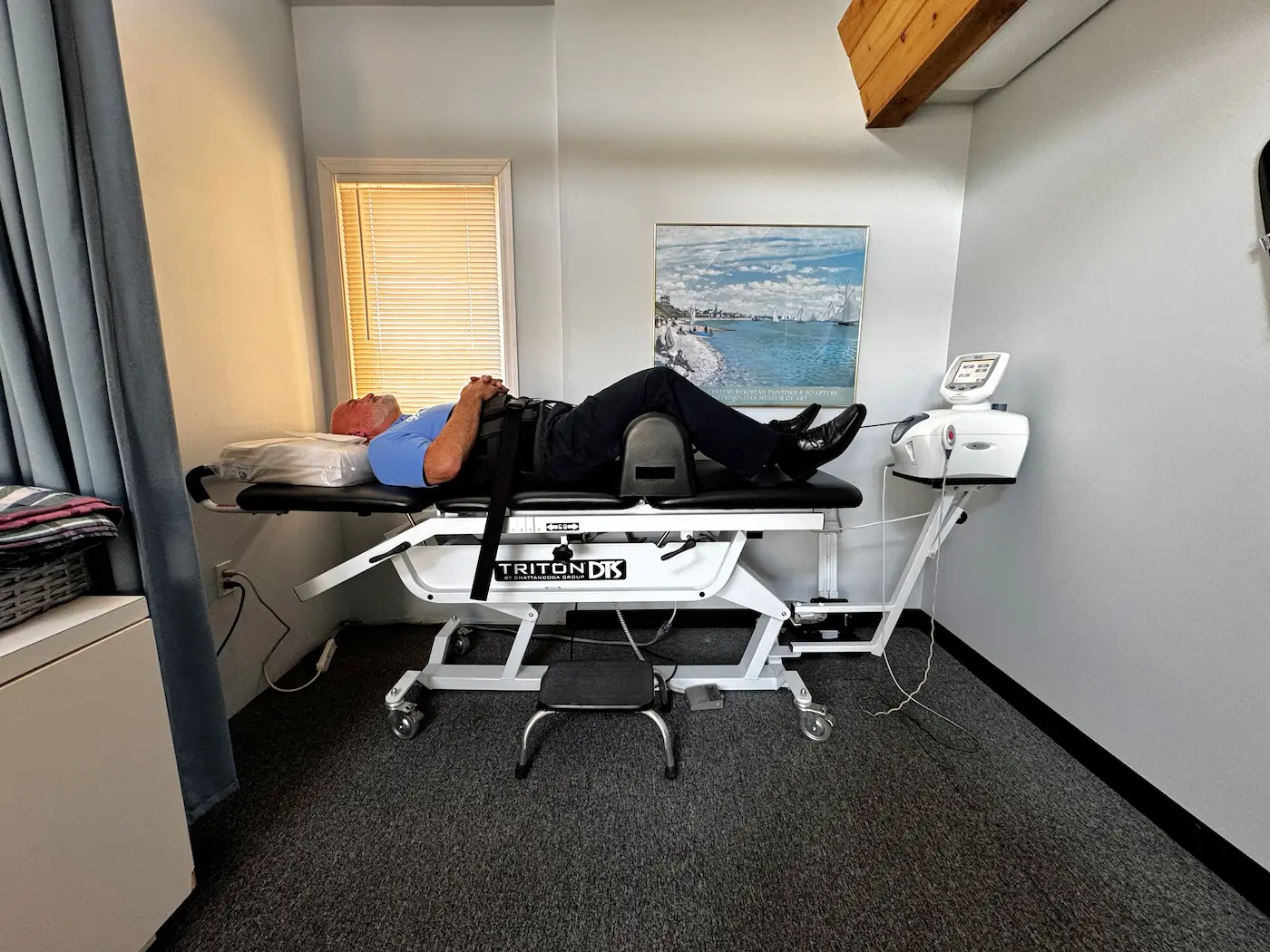
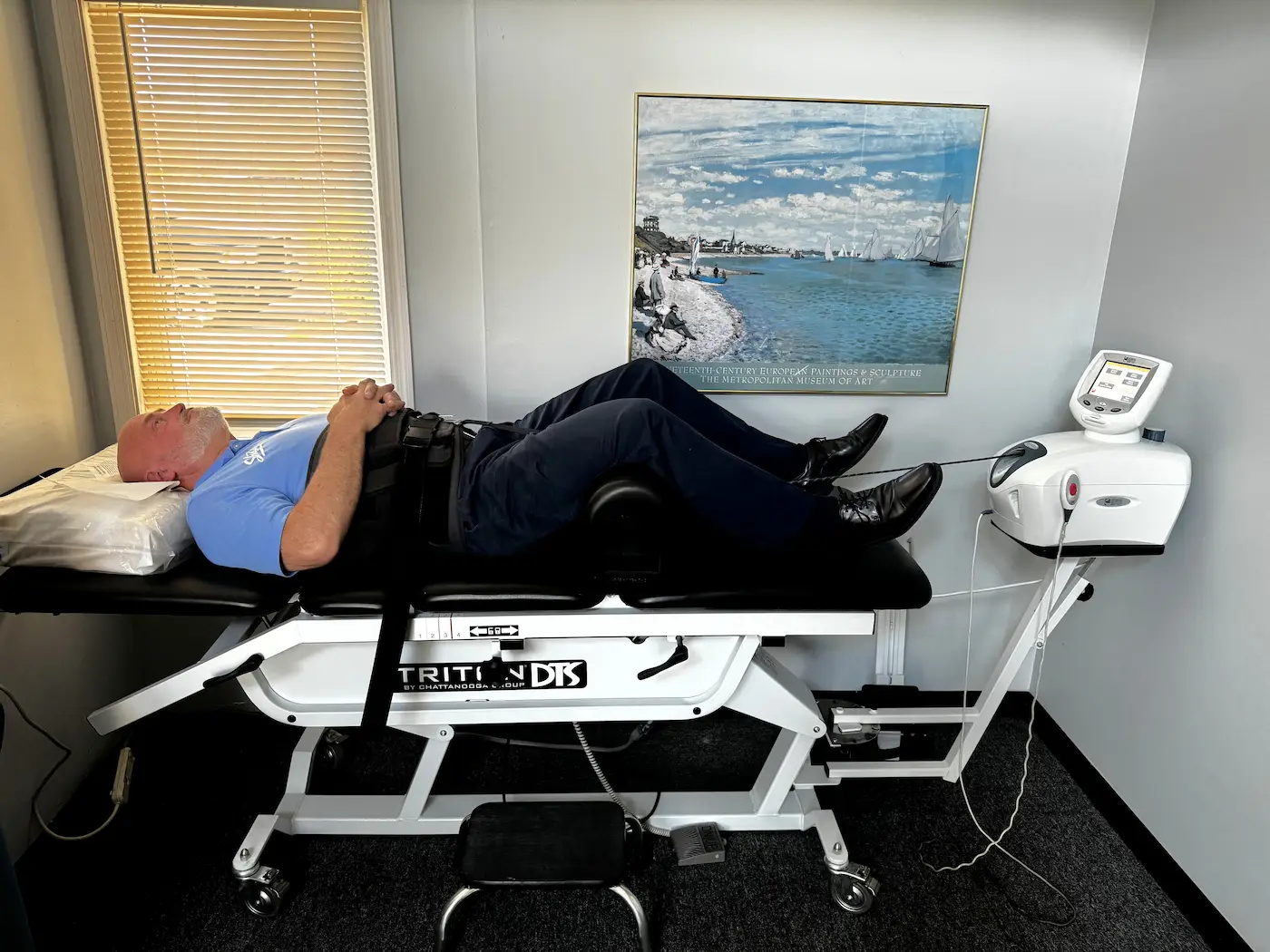
When it is time for a session, you lie down on the decompression table, usually on your back, though the position can vary based on the area being treated. A padded support system is fitted around you to hold you comfortably in place.
You stay fully clothed the entire time. Once you are positioned, the table is programmed with the settings specific to your treatment plan.
What the Treatment Feels Like
This is the question most people have, and the answer usually surprises them. Spinal decompression is gentle. The table applies a slow, steady pull, holds it, and then eases off, repeating that cycle throughout the session.
Most people describe it as a mild stretching sensation that is comfortable, not painful. It is common to relax completely during a session, and some people find it relaxing enough to fall asleep.
How Long a Session Takes
A typical session runs about 20 to 30 minutes, depending on your plan. You can usually get back to your normal day right afterward, since there is no downtime.
Because the treatment is done in a series, sessions are spaced out over a period of weeks. The exact schedule depends on your condition and how you respond along the way.
How Many Sessions You Might Need
Decompression works gradually, so it is done as a course of treatment rather than a single visit. Disc tissue and the surrounding structures respond over time, not overnight.
The number of sessions varies from person to person based on the severity and nature of the problem. Dr. Oyler recommends a specific plan after your exam rather than fitting everyone into the same package, and the plan is adjusted as you progress.
What You Might Feel Afterward
Many people feel a sense of relief after sessions, though responses vary. Some notice mild soreness early in a treatment plan, similar to how you might feel after gentle exercise, which tends to settle as the body adjusts.
As with any treatment, progress is usually a trend rather than a straight line. What Dr. Oyler looks for is steady, meaningful improvement over the course of the plan.
How Decompression Fits With Other Care
Decompression rarely works alone. It often pairs with the Gonstead adjusting technique and other care aimed at restoring normal movement and supporting the surrounding muscles and joints.
Addressing the disc pressure along with the joint mechanics gives the spine support from more than one angle. That combined approach is often more effective than any single piece on its own.
Who Is a Good Candidate
Good candidates usually have disc-related pain, such as a herniated or bulging disc, or nerve pain that traces back to the disc. People hoping to avoid surgery or injections often look into it as a non-surgical option.
It is not right for everyone. Certain conditions, including some fractures, advanced osteoporosis, and specific spinal hardware, can make decompression inappropriate, which is another reason the exam comes first.
Getting Started in Reynoldsburg
The first step is simply finding out whether decompression is a good fit for your situation. With more than four decades of experience, Dr. Oyler evaluates the source of your pain and explains whether spinal decompression makes sense for you.
If it does, you will know what your plan looks like before you begin. If it does not, he will point you toward an approach that fits better.
Common Questions About Decompression
People often ask whether decompression is safe. For appropriate candidates, it is a gentle, well-tolerated treatment, which is a large part of why it appeals to those who want to avoid the risks of surgery. The screening exam beforehand is there to make sure it is right for you.
Another common question is whether it is like being stretched on a rack, which it is not. The force is gentle and controlled, applied and released in slow cycles, and you remain in control and can speak up throughout.
How Decompression Differs From Simple Traction
Basic traction has been around for a long time, but it applies a steady, constant pull. Modern spinal decompression is more refined, using a computer-controlled cycle of pull and release designed to avoid triggering the muscle guarding that can work against a constant stretch.
That cycling is part of what allows the treatment to target a specific segment more effectively. It is a more precise tool than older, simpler approaches.
Supporting Your Results Between Sessions
What you do outside the office supports what happens during treatment. Staying gently active, being mindful of how you lift and sit, and following the home guidance Dr. Oyler provides all help protect your progress.
Patients across Reynoldsburg who pair their sessions with these habits tend to get more out of the treatment. Decompression does its part, and your daily choices support the rest.
Is Decompression Right for Your Back or Neck?
Decompression can be used for both the lower back and the neck, since discs in either region can compress nearby nerves. The approach is tailored to the area and the specific problem found on your exam.
The only way to know if it fits your situation is to have the source of your pain properly assessed. That assessment is the starting point for any decompression plan.
If you are curious whether spinal decompression could help your back or neck pain, we would be glad to take a look. Contact Oyler Chiropractic or call (614) 863-0111 to schedule a visit.