Table of Contents
SoftWave therapy is not only for chronic, long-standing pain. It can also help with fresh injuries like sprains and strains by jump-starting the body’s natural healing response early, when it matters most. Using broadband unfocused acoustic waves, SoftWave improves blood flow, reduces inflammation, and recruits stem cells to the injured tissue. At Oyler Chiropractic in Reynoldsburg, SoftWave is used for both acute injuries and chronic conditions, so you do not have to wait months for it to be an option.
SoftWave Is Not Just for Chronic Pain
A lot of people first hear about SoftWave therapy in the context of long-standing problems, like a knee that has ached for years or an old injury that never fully healed. That is a common use, but it is only half the story.
SoftWave is also effective for acute injuries, the fresh sprains, strains, and soft tissue injuries that happen suddenly. In fact, starting the healing process early can be one of the most useful times to use it.
What Happens When You Sprain or Strain Something
A sprain involves the ligaments that connect bone to bone, while a strain involves muscles or the tendons that connect muscle to bone. Both happen when the tissue is stretched or torn beyond what it can handle, often during a fall, an awkward step, or a sudden movement.
The body responds with inflammation, swelling, and pain, which is its way of protecting and beginning to repair the area. That process works, but it can be slow, and sometimes the tissue heals incompletely or stalls along the way.
How SoftWave Therapy Works on Fresh Injuries
SoftWave therapy delivers broadband unfocused acoustic waves into the injured tissue. Those waves trigger the body’s own repair signals, helping to recruit stem cells to the area, improve blood flow, and reduce deep inflammation.
On a fresh injury, that means giving the healing process a boost right when the tissue is trying to repair itself. Rather than waiting to see how well the injury heals on its own, SoftWave supports a more active, complete repair from the start.
Why Starting Early Can Matter
How an injury heals in its early stages can shape how it feels months later. When tissue heals poorly or incompletely, it can leave behind lingering weakness, stiffness, or pain that lasts long after the original injury.
By supporting better healing early, the goal is to reduce the chance of a fresh injury turning into a long-term problem. That does not mean skipping proper care, but it does give the tissue a better environment to recover in.
Common Acute Injuries It Can Help
SoftWave can be useful for a range of fresh injuries. Ankle sprains, muscle strains, and soft tissue injuries around the knee are common examples. Sudden shoulder injuries and tweaked muscles in the back also fall into this category.
Because the waves are unfocused and cover a broader area, they can reach the surrounding tissue involved in the injury, not just a single narrow point.
What a Session Involves
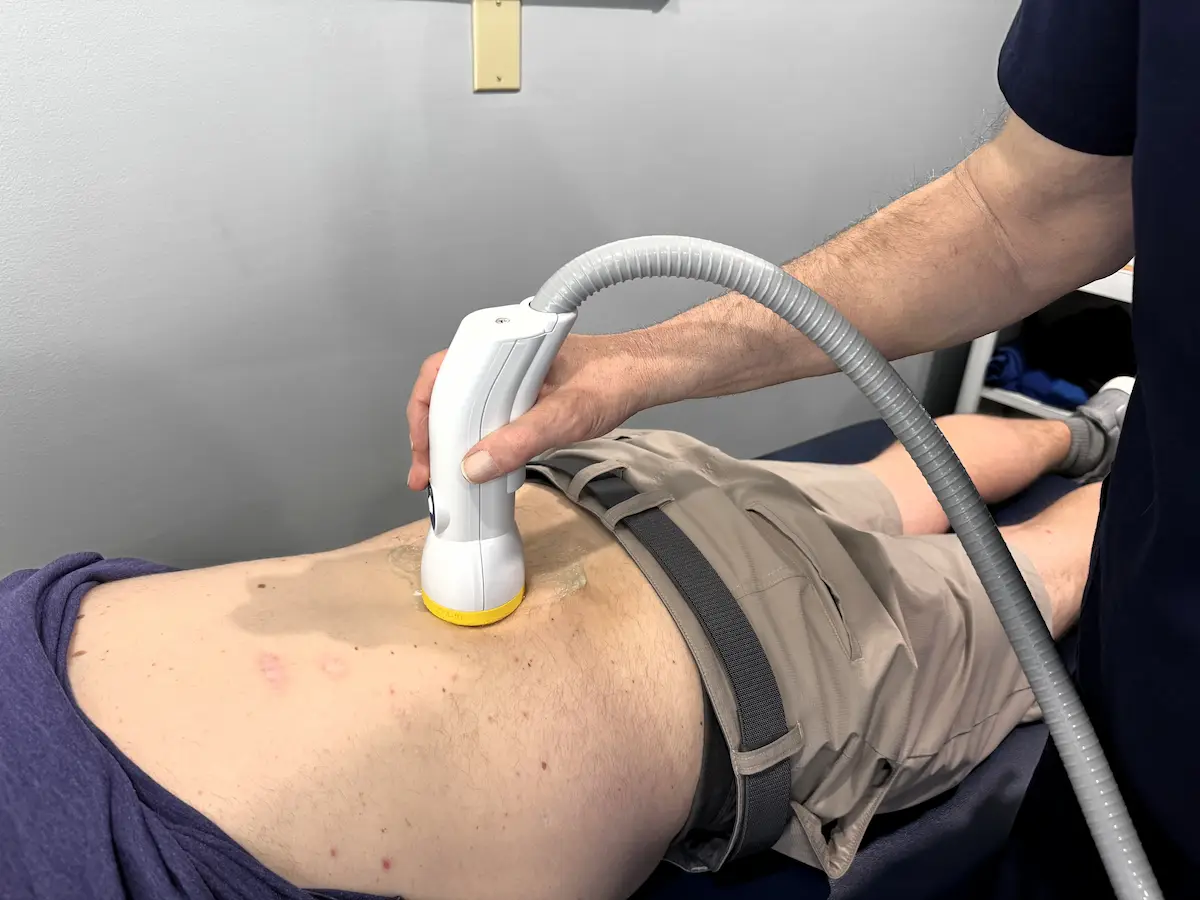
A SoftWave session is straightforward. A handheld device is applied to the injured area with a coupling gel, and you feel a mild tapping or pressure as the waves are delivered. It is generally well tolerated.
More than one area can be treated in a visit, there are no needles or medication, and there is no downtime. Most people return to their normal activity the same day, within the limits of their injury.
SoftWave Alongside the Basics
SoftWave does not replace common-sense early care. Protecting the injury, gentle movement as tolerated, and following your provider’s guidance all still matter. SoftWave works alongside those basics to support the tissue repair happening underneath.
The number of sessions depends on the injury and its severity. Dr. Oyler recommends a specific protocol after evaluating the area rather than applying the same plan to every injury.
How It Pairs With Chiropractic Care
Fresh injuries often involve more than just the soft tissue. A bad ankle roll or a sudden twist can affect nearby joints and how they move, which is where hands-on care comes in.
Pairing SoftWave with an adjustment when appropriate addresses both sides of the problem: the tissue that was injured and the joint mechanics around it. Treating both tends to support a more complete recovery than focusing on either one alone.
When to Get an Injury Checked
Not every ache needs professional care, but some injuries do. If you cannot bear weight, if there is significant swelling or deformity, if the pain is severe, or if an injury is not improving as expected, it is worth having it evaluated.
In Reynoldsburg, Dr. Oyler can assess a fresh injury, determine whether SoftWave is appropriate, and rule out anything that needs a different level of care. SoftWave is generally avoided over open wounds, active infections, or malignant tissue, which is another reason an evaluation comes first.
Acute Versus Chronic: Why It Works for Both
The reason SoftWave helps with both fresh and long-standing problems comes down to how it works. It does not simply mask pain or force a stretch. It stimulates the body’s own repair response, and that response is useful whether an injury is brand new or has been stuck for years.
On a fresh injury, it supports the healing that is already underway. On a chronic problem, it can help restart repair in tissue that stalled. The same mechanism, applied at different points in the timeline.
Will It Hurt?
Most people tolerate SoftWave well, even on a tender fresh injury. You feel a tapping or a pulsing sensation as the device moves over the area, and while it can be mildly uncomfortable over a sore spot, it is generally not painful.
The intensity can be adjusted for comfort, especially early on when the injury is still sensitive. Dr. Oyler tailors the approach to what the injury can handle at that stage.
What About Rest and Ice?
The old advice to rest and ice a fresh injury is not wrong, but it has limits. Complete rest for too long can leave the area stiff and weak, and simply managing swelling does not actively drive repair.
SoftWave adds something those basics do not: a nudge to the tissue’s own healing process. Used together, gentle protection early on and SoftWave to support repair can complement each other well.
Getting Back to Activity
For active people, one of the hardest parts of a fresh injury is the time on the sidelines. Supporting a fuller, more complete recovery is not just about comfort, it is about getting back to the things you want to do with less risk of a lingering problem.
The aim is always a recovery that holds, rather than rushing back before the tissue is ready. Dr. Oyler helps set a realistic path based on the specific injury.
If you have a fresh sprain, strain, or injury and want to support a faster, fuller recovery, we can help. Contact Oyler Chiropractic in Reynoldsburg or call (614) 863-0111 to schedule a visit.