Table of Contents
Tennis elbow and golfer’s elbow are both forms of tendon irritation at the elbow, but they affect opposite sides. Tennis elbow causes pain on the outer part of the elbow, while golfer’s elbow causes pain on the inner side, and neither one requires ever picking up a racquet or a golf club. At Oyler Chiropractic in Reynoldsburg, OH, Dr. Oyler treats both with extremity adjusting and SoftWave therapy to address the joint mechanics and the damaged tendon.
What These Two Conditions Have in Common
Both are overuse injuries of the tendons that attach near the elbow. The tendons connect your forearm muscles to the bony bumps on either side of the joint, and repeated stress causes small areas of damage.
That damage leads to pain, tenderness, and a weaker grip. The main thing that sets the two apart is simply which side of the elbow is affected.
What Tennis Elbow Is
Tennis elbow, known medically as lateral epicondylitis, affects the outer side of the elbow. It involves the tendons that extend your wrist and fingers backward.
You tend to feel it when gripping, lifting, or straightening the wrist against resistance. The pain can travel down the forearm and make simple tasks like shaking hands or holding a coffee cup uncomfortable.
What Golfer’s Elbow Is
Golfer’s elbow, or medial epicondylitis, affects the inner side of the elbow. It involves the tendons that flex your wrist and curl your fingers toward your palm.
Pain shows up on the inside of the elbow and can travel down toward the wrist. Gripping and twisting motions, like turning a doorknob or swinging a tool, often make it worse.
The Key Differences at a Glance
Here is the quick way to keep them straight:
- Tennis elbow: pain on the outer elbow, tied to the wrist extensor tendons.
- Golfer’s elbow: pain on the inner elbow, tied to the wrist flexor tendons.
- Aggravating motions: tennis elbow flares with lifting and straightening; golfer’s elbow flares with gripping and curling.
- Shared trait: both are overuse tendon injuries, not a sign you played the sport.
You Do Not Have to Play the Sport
The names are misleading, because most people with these conditions never touch a racquet or a club. Any repeated motion that loads the forearm tendons can bring them on.
Painters, carpenters, cooks, hairstylists, and office workers all develop these injuries from daily tasks. Gripping tools, typing, using a mouse, and repetitive lifting are common culprits around Reynoldsburg and everywhere else.
What Makes These Injuries Worse
A few factors tend to turn a minor elbow ache into a lingering problem. Recognizing them can help you avoid making it worse.
- Repeating the same gripping or twisting motion without a break
- Poor technique or an awkward grip during activity or work
- Increasing activity too quickly instead of easing in
- Weak forearm muscles that leave the tendons doing more
- Ignoring the early twinges and pushing through them
The more of these that stack up, the harder the tendon has to work. Addressing them early tends to keep a small issue from dragging on.
How to Tell Which One You Have
The clearest clue is where the pain sits. Tenderness on the outer bump of the elbow points toward tennis elbow, while tenderness on the inner bump points toward golfer’s elbow.
The movements that hurt help confirm it. Pain when you straighten or lift suggests tennis elbow, and pain when you grip or curl the wrist suggests golfer’s elbow. An exam pins it down for certain.
Why These Injuries Tend to Linger
Tendons have a limited blood supply, which means they heal slowly. When the damage outpaces the repair, the injury can drag on for months.
Resting helps for a while, but the pain often returns the moment you go back to the activity that caused it. That is because rest alone does not rebuild the damaged tendon or fix the mechanics feeding the problem.
How Dr. Oyler Treats Elbow Pain
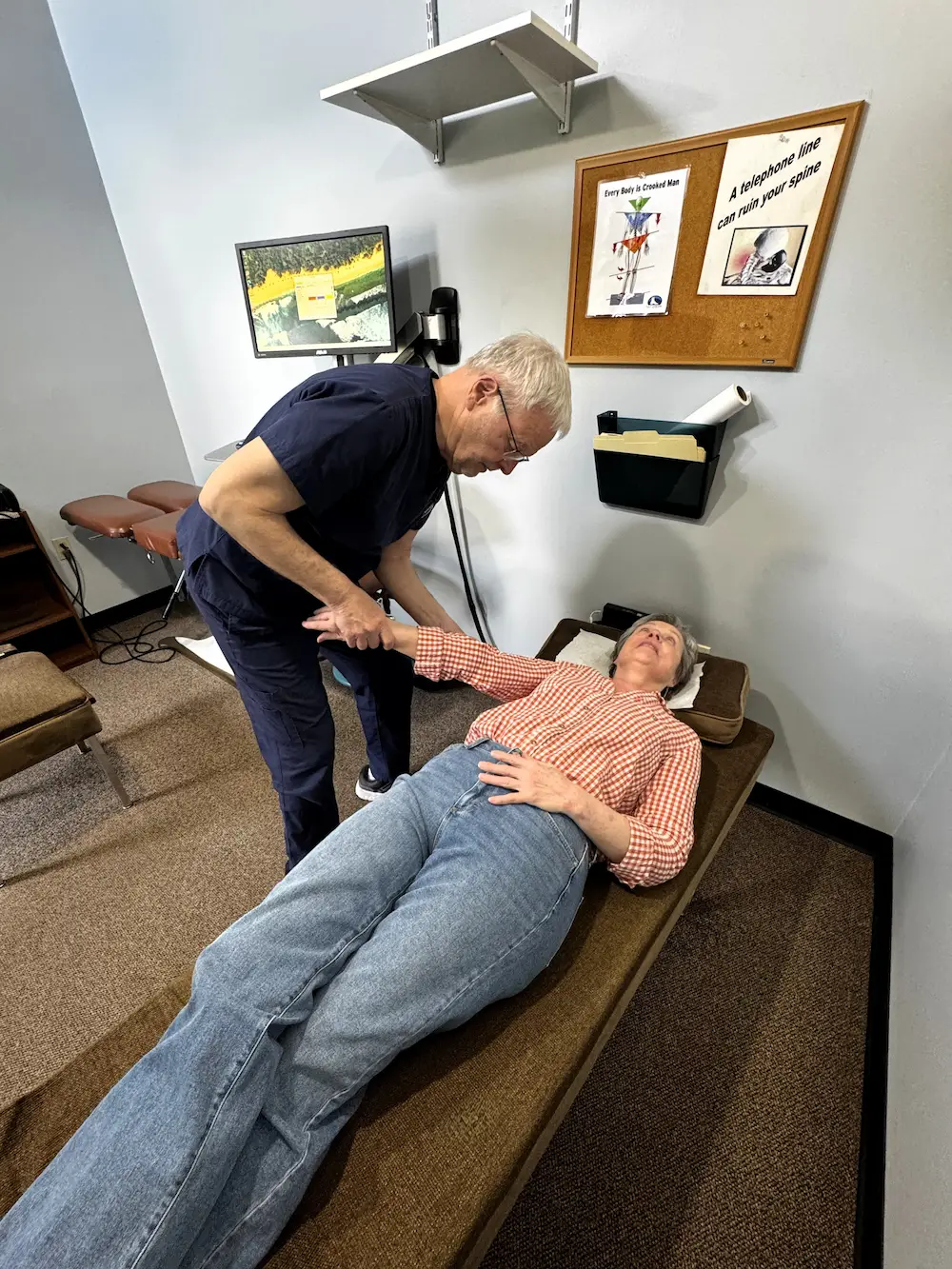
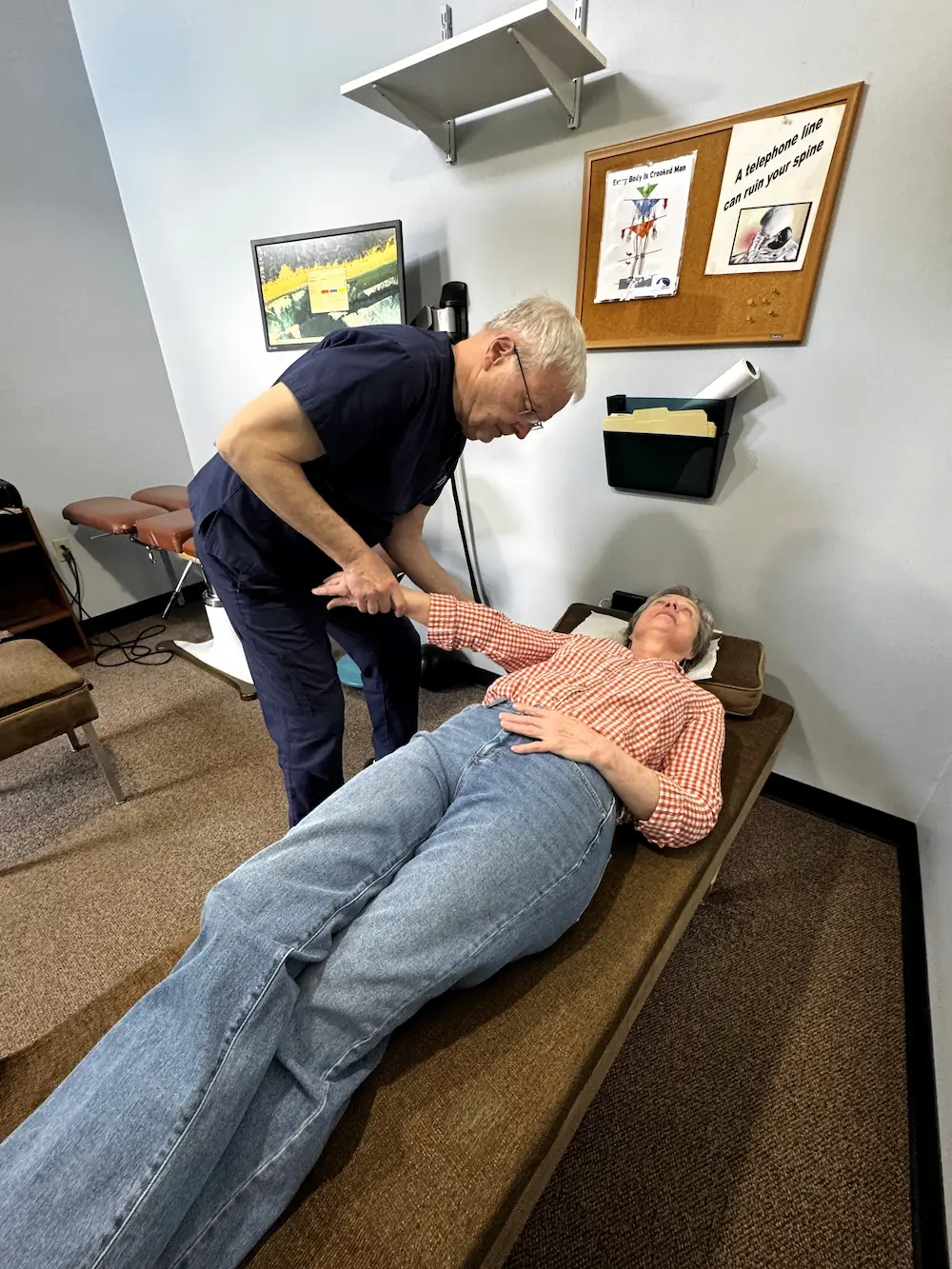
This is an area where Dr. Oyler’s training stands out. He studied extremity adjusting under Dr. Mark Charrette, an internationally recognized leader in adjusting joints beyond the spine.
That background lets him assess the elbow, wrist, and surrounding joints, not just the sore spot. With more than 43 years in practice, Dr. Oyler has helped many patients whose elbow pain had not improved with rest alone.
How Extremity Adjusting Helps
When the joint mechanics of the elbow or wrist are off, the tendons take on more strain than they should. Restoring proper motion to those joints can relieve that extra load.
Extremity adjusting brings the same precision used on the spine to the joints of the arm. Getting the mechanics right removes a source of ongoing irritation that stretching cannot reach.
How SoftWave Therapy Helps the Tendon
Because the tendon itself is damaged, the tissue needs help to repair. SoftWave therapy uses broadband acoustic waves to improve blood flow and recruit the body’s own stem cells to the area.
That helps a tendon that has stalled in healing get moving again. Pairing it with joint correction addresses both the tissue damage and the mechanics at the same time. You can also read more on our tennis elbow page.
Why Pushing Through It Backfires
It is tempting to work through elbow pain and hope it settles, especially if it started small. The problem is that the tendon does not get a chance to recover while you keep loading it.
Continuing the aggravating activity can turn a manageable injury into a stubborn one that lingers for months. Easing off sooner usually means a simpler path back.
Simple Steps That Support Recovery
A few adjustments can take pressure off the tendon while you address the cause. None of them replace proper care, but they help.
Backing off the aggravating motion, improving your grip and technique, and warming up before activity all reduce the strain. A supportive brace can help in some cases, and Dr. Oyler can tell you whether that makes sense for your situation.
How Long Does Recovery Take?
Elbow tendon injuries heal on their own timeline, and it depends on how long the problem has been building. A recent case often responds faster than one that has been ignored for months.
Dr. Oyler will give you an honest sense of the timeline after his exam rather than a set promise. The aim is steady progress as the tendon repairs and the mechanics improve.
What to Expect
The process starts with an exam to confirm which condition you have and check the joints involved. From there, Dr. Oyler builds a plan around your specific injury rather than a standard routine.
How long it takes depends on how long the tendon has been irritated and how much you can ease up on the aggravating activity. He will give you an honest read on what to expect after he evaluates you.
If nagging elbow pain is getting in your way in Reynoldsburg or a nearby community, we would be glad to help you sort out the cause. Call Oyler Chiropractic at (614) 863-0111 or reach out here to schedule a visit.