Table of Contents
You may need custom orthotics if your foot mechanics are quietly driving pain in your feet, knees, hips, or lower back that keeps coming back despite other treatment. Unlike generic insoles, custom orthotics are made for your specific feet to correct the imbalances that throw off how you stand and move. At Oyler Chiropractic in Reynoldsburg, orthotics are recommended when the exam shows your foot structure is part of the problem, not as a one-size-fits-all add-on.
What Custom Orthotics Actually Are
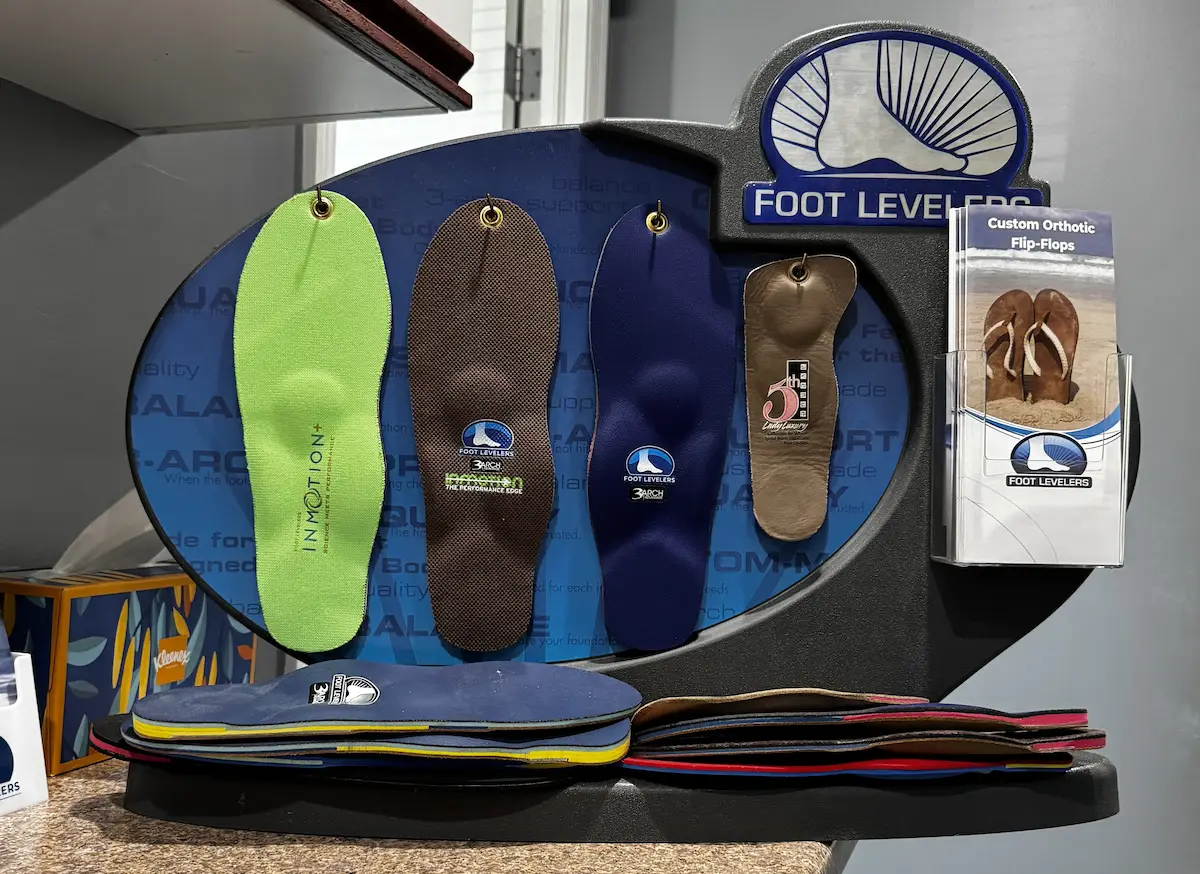
Custom orthotics are supportive inserts made specifically for your feet. They are not the cushioned insoles you grab off a pharmacy shelf. A true custom orthotic is built from a mold or scan of your own foot and designed to correct the way your foot contacts the ground.
The goal is not just comfort. It is correcting the mechanics of how you stand, walk, and carry your weight, which affects everything built on top of your feet.
How Foot Problems Travel Up the Body
Your feet are the foundation for everything above them. When that foundation is off, the imbalance does not stay in the feet. It works its way up through the ankles, knees, hips, and spine.
Think of a building with a slightly tilted foundation. The problem may start at the bottom, but the cracks can show up several floors higher. Feet that roll inward, arches that collapse, or uneven weight distribution can all create strain far from the feet themselves.
This is why someone can have knee or lower back pain that never fully resolves, even with treatment aimed at the knee or back, because the real driver is at ground level.
Signs Your Feet Might Be the Problem
A few patterns suggest your feet could be contributing to your pain. Pain that is worse after standing or walking for long periods is one. Uneven wear on the soles of your shoes is another, since it reveals how your weight is really landing.
Other clues include arches that look flat or unusually high, ankles that roll inward when you walk, or recurring foot pain like heel pain in the morning. Knee, hip, or lower back pain that has not responded to other care can also point back to the feet.
None of these confirms the need for orthotics on its own, but together they are worth a closer look at how your feet are functioning.
Custom Orthotics vs. Store-Bought Insoles
Over-the-counter insoles have their place. They can add cushioning and mild support, and for minor, occasional discomfort they may be all someone needs.
The difference is correction. Generic insoles are made for an average foot, not yours, so they support in a general way without addressing your specific imbalance. Custom orthotics are shaped to your foot structure and the exact correction you need, which is why they can help with problems that cushioned insoles never touch.
The Connection to Plantar Fasciitis
Foot mechanics play a large role in plantar fasciitis, that stubborn heel pain that is often worst with the first steps in the morning. When the arch is not supported properly, the band of tissue along the bottom of the foot gets overstretched and irritated.
Custom orthotics can take some of that strain off the tissue by supporting the arch and improving how the foot loads. They are often used alongside other treatment rather than on their own, since plantar fasciitis usually needs more than one angle of care.
The Connection to Lower Back Pain
The link between the feet and the back surprises a lot of people. When your feet do not support you evenly, your pelvis and spine have to compensate, and that compensation can show up as lower back pain.
Correcting the foundation with orthotics can ease some of that strain, especially when foot mechanics are a genuine part of the picture. In Reynoldsburg, this is one of the connections Dr. Oyler looks for when back pain does not add up on its own.
How Custom Orthotics Are Made
The process starts with an assessment of your feet, your gait, and how the rest of your body is affected. From there, an impression or scan of your feet captures their exact shape.
That information is used to build orthotics designed for your specific structure and correction needs. The result fits into your shoes and works quietly in the background as you go about your day.
Do Orthotics Fix the Problem or Just Support It?
This is a fair question, and the honest answer depends on the situation. For some people, orthotics are a long-term support that keeps the foundation stable. For others, they are one piece of a broader plan that also addresses joints, tissue, and movement patterns.
What they are not is a magic fix on their own. Orthotics work best when the underlying cause has been properly identified, which is why an exam comes first rather than simply handing out inserts.
When Orthotics Are Part of a Bigger Plan
At the practice, custom orthotics are rarely the whole answer. They often pair with chiropractic care, extremity work, or other treatment aimed at the knees, hips, or spine, so the whole chain is addressed rather than just the feet.
With more than four decades of experience, Dr. Oyler evaluates whether your foot mechanics are truly part of the problem before recommending orthotics, so you are not paying for something you do not need.
A Simple Way to Start
If your shoes wear unevenly, your feet ache after a normal day, or a nagging knee or back problem has not budged, your feet are worth checking. It is a small part of the body that carries a large share of the load.
The point is not to sell everyone a pair of orthotics. It is to find out whether your feet are actually part of the story, and to support them properly if they are.
How Long Do Custom Orthotics Last?
Custom orthotics are built to hold up, but they are not permanent. How long a pair lasts depends on your activity level, your body weight, the surfaces you spend time on, and the materials used. For many people, a well-made pair holds its support for a few years before it needs replacing.
Signs that orthotics are wearing out include a return of the symptoms they were helping, visible flattening or breakdown of the material, or a change in how they feel underfoot. When that happens, a fresh pair usually restores the support.
Getting Used to a New Pair
New orthotics can feel strange at first, because they change how your feet have been positioned for years. Most people adjust within a couple of weeks by wearing them for a few hours a day at first and gradually building up to full-time wear.
A little initial awareness is normal. Pain or persistent discomfort is not, and it usually means the orthotics need a small adjustment, which is a normal part of getting the fit right.
Shoes Matter Too
Even the best orthotic works better in a supportive shoe. A quality orthotic inside a worn-out or unsupportive shoe is doing part of the job with a handicap. Pairing orthotics with shoes that have a stable heel and reasonable support helps the whole setup do its work.
If you suspect your feet are behind your pain, we would be glad to take a look and tell you honestly whether orthotics would help. Contact Oyler Chiropractic in Reynoldsburg or call (614) 863-0111 to schedule a visit.