Table of Contents
SoftWave and shockwave therapy both use acoustic waves to treat pain and stalled healing, but they are not the same treatment. Shockwave delivers a focused, high-intensity wave into a small, targeted spot, while SoftWave therapy sends an unfocused, broadband wave across a wider area of tissue and helps draw the body’s own stem cells to the site. At Oyler Chiropractic in Reynoldsburg, OH, Dr. Oyler uses SoftWave therapy because it tends to be more comfortable and works for both fresh injuries and long-standing problems.
Both Use Acoustic Waves, But Not in the Same Way
The names sound almost identical, and that is where most of the confusion starts. Both therapies send energy into the body through sound waves instead of needles or surgery. The real difference is how that energy is shaped and where it goes.
One method concentrates the wave into a tight point. The other spreads it out across the tissue. That single distinction changes how the treatment feels, how much area it reaches in one pass, and what happens at the cellular level.
How Traditional Shockwave Works
Focused shockwave aims a high-energy wave at one specific point, usually a small spot of damaged tissue. The idea is to create controlled microtrauma that sparks an inflammatory response, which the body then works to repair.
That approach can help, but the concentrated energy is often more intense right where it makes contact. For some people that means more discomfort during the session, and the device treats a smaller zone at a time.
How SoftWave Therapy Works
SoftWave therapy uses a broadband, unfocused wave that disperses across a larger volume of tissue. Rather than driving force into one pinpoint, it reaches the surrounding area as well.
That wave does more than stir up inflammation. It stimulates growth factors, improves circulation, and helps recruit stem cells to the treatment zone. The goal is genuine tissue repair, not a short-term mute button on the pain.
Why the Stem Cell Difference Matters
This is the part most people have never heard about. Your body already has repair cells that travel to injured areas, but in chronic problems that signal can fade and healing stalls out.
SoftWave helps reactivate that process by calling stem cells back to the area that needs them. When tissue has been stuck for months, restarting repair at the cellular level is often what finally moves things forward. That is a different goal than simply quieting pain for a few days.
The Main Differences at a Glance
Here is how the two stack up on the points patients ask about most:
- Wave type: Shockwave is focused and concentrated, while SoftWave is broadband and unfocused.
- Coverage: Shockwave treats a small, pinpointed spot, while SoftWave spreads across more tissue per pass.
- Cellular effect: SoftWave actively recruits stem cells to the area, which supports real repair.
- Comfort: SoftWave is generally better tolerated during treatment.
- Best use: SoftWave works for both acute injuries and chronic conditions where healing has stalled.
Conditions SoftWave Therapy Can Help
Because the wave covers more area and works on the tissue itself, SoftWave fits a wide range of joint and soft tissue problems. At Oyler Chiropractic, Dr. Oyler often uses it for knee pain and joint degeneration, rotator cuff and shoulder issues, and plantar fasciitis that has not responded to rest.
It also helps with tennis elbow and golfer’s elbow, Achilles and patellar tendon problems, hip pain, neuropathy, and chronic back or neck pain that involves the soft tissue. Whether the injury happened last week or has lingered for years, the treatment targets the same underlying repair process.
Why Dr. Oyler Uses SoftWave at His Reynoldsburg Practice
In more than 43 years of practice, Dr. Oyler has treated countless patients who arrived after trying other things without lasting relief. Many had already worked through physical therapy, rest, medication, or injections.
He chose SoftWave therapy because it addresses the cellular side of healing that those approaches often leave untouched. Using the SoftWave OW100S device, he builds the treatment around each patient instead of running everyone through the same routine. You can learn more on our SoftWave therapy page.
What a SoftWave Session Actually Feels Like
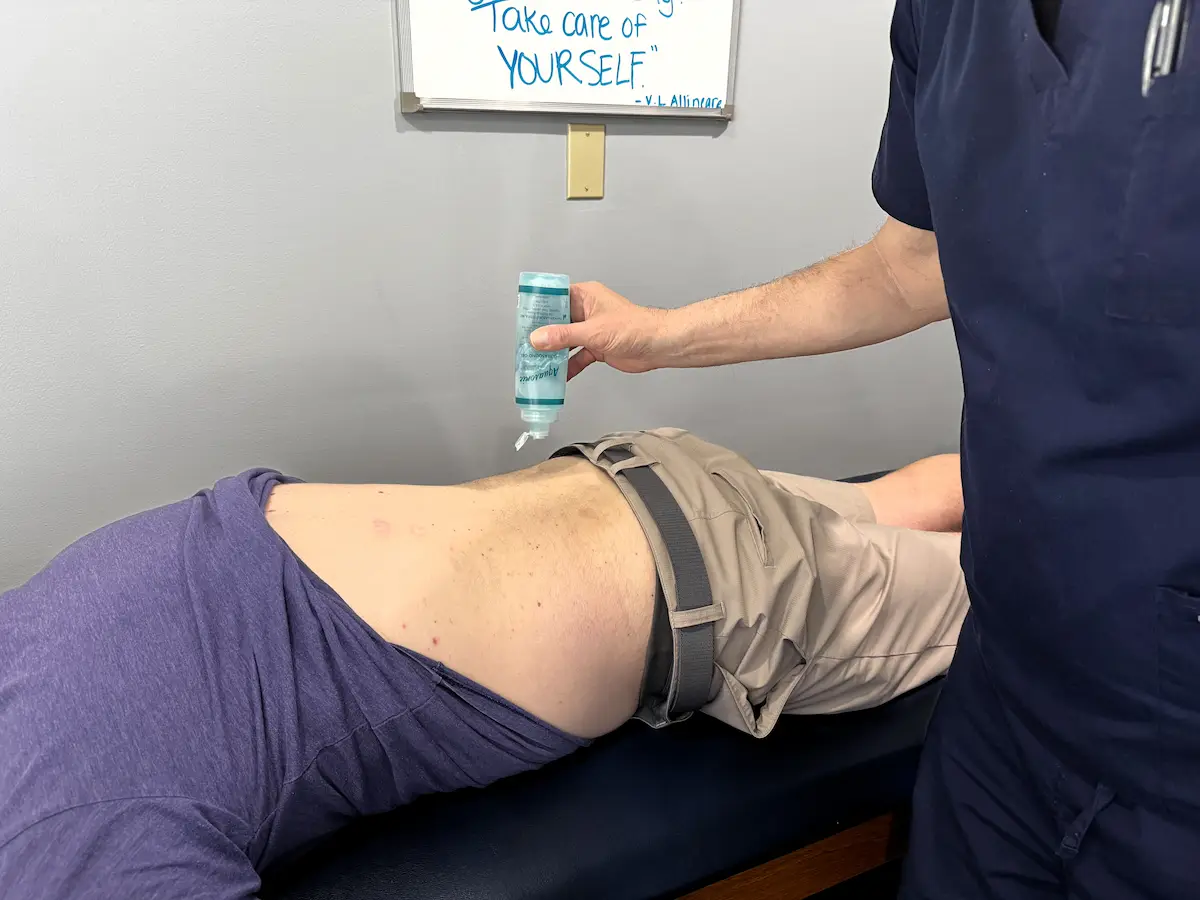
Treatment is simple. A handheld device is applied to the skin with a coupling gel, and most people feel a mild tapping or pressure as the wave passes through the tissue.
There is no downtime afterward. Several areas can be treated in one visit, and most patients return to their normal day right away. How many sessions you need, and how often, depends on your condition and how long it has been going on, so Dr. Oyler will lay out the protocol that fits your situation.
How Many Sessions Will You Need?
There is no single answer that fits everyone, and any honest provider will tell you the same. The number of sessions depends on the condition, how severe it is, and how long it has been going on.
A recent injury may respond faster than a problem you have carried for years. Dr. Oyler reviews your situation during the exam and recommends a protocol built around your case, including how many visits he expects and how far apart they should be. As the tissue responds, that plan can be adjusted.
SoftWave Therapy vs. a Cortisone Shot
Cortisone injections are a common go-to for stubborn pain, so it helps to understand how they differ from SoftWave. A cortisone shot reduces inflammation and can bring quick relief, but it does not repair the underlying tissue.
When the medication wears off, the original problem is often still there. SoftWave takes the opposite approach by working to repair the tissue itself, which is why it can help when repeated injections have only bought temporary relief. For many patients, addressing the cause beats masking the symptom again and again.
Who Tends to Benefit Most
SoftWave is a strong fit for people dealing with nagging joint and tendon problems that have not improved with the usual steps. If you have rested, stretched, modified your activity, and still feel stuck, the tissue may simply need help restarting its repair.
It also suits patients who want to stay active and avoid more invasive options when possible. The goal is to get the tissue healing again so you can return to the things you enjoy, rather than working around the pain indefinitely.
Better Together: SoftWave and Chiropractic Care
SoftWave often works best alongside hands-on care. Chiropractic adjustments restore proper joint motion, while SoftWave reduces deep inflammation and restarts cellular repair in the surrounding tissue.
One handles the mechanical side, the other handles the cellular side. Treating both at once tends to give a more complete result than addressing either one alone, which is why Dr. Oyler frequently pairs them.
Is SoftWave Therapy Right for You?
SoftWave helps a broad range of soft tissue and joint problems, but it is not for every situation. It should be avoided over open wounds, active infections, or known malignant tissue.
Results also take time. Tissue repair is a process, and some conditions need a series of sessions before the change holds. After Dr. Oyler evaluates you, he will be straight with you about what to expect rather than promising an overnight cure.
If you are weighing your options for stubborn pain in Reynoldsburg or a nearby community, we are glad to talk it through. Call Oyler Chiropractic at (614) 863-0111 or reach out here to schedule a visit.