Table of Contents
If your knee pain has been around for months and hasn’t responded to rest, physical therapy, or cortisone injections, there’s a reason. Chronic knee pain often means the tissue is stuck in a failed healing cycle, and standard treatments don’t address that. SoftWave therapy does.
Why Chronic Knee Pain Is So Hard to Treat
Acute injuries heal because the body sends blood flow, inflammatory signals, and repair cells to the damaged area. That process works well for fresh injuries. The problem with chronic knee pain is that this healing response has wound down without finishing the job.
Damaged cartilage, tendons, and ligaments around the knee have poor blood supply to begin with. When the acute healing phase ends, the body essentially moves on, leaving behind scar tissue, calcifications, and structurally compromised tissue that generates pain with every step.
Rest doesn’t fix this. Stretching doesn’t fix this. Anti-inflammatory medication reduces the pain signal temporarily but doesn’t change what’s happening in the tissue. That’s why so many knee pain patients find themselves in the same place year after year.
What Is SoftWave Therapy?
SoftWave therapy is an acoustic wave technology that delivers focused energy pulses into damaged tissue to restart the body’s natural repair process. It’s sometimes grouped with shockwave therapy, but SoftWave uses a broader, unfocused wave pattern that activates a wider treatment zone and stimulates a specific cellular healing response.
The acoustic waves trigger the release of growth factors, increase blood flow to the area, break down calcifications and scar tissue, and signal stem cells to migrate to the damaged tissue. In plain terms, it picks up the healing process where the body left off and drives it forward in a way that passive treatments cannot.
SoftWave is non-invasive, requires no injections, and has no downtime. Sessions are performed in the office at Oyler Chiropractic in Reynoldsburg.
How SoftWave Helps Knee Pain Specifically
The knee is one of the most common and most successful treatment areas for SoftWave therapy. Several of the conditions that drive chronic knee pain respond particularly well to acoustic wave treatment.
Osteoarthritis and Cartilage Breakdown
Knee osteoarthritis involves the gradual breakdown of cartilage, the cushioning tissue between the femur and tibia. SoftWave stimulates the cellular environment around damaged cartilage, reduces inflammation in the joint space, and promotes the kind of tissue remodeling that can meaningfully reduce pain and improve function even when cartilage loss is present.
Patellar Tendinopathy
Chronic pain at the front of the knee, particularly below the kneecap, is often driven by patellar tendinopathy. This is exactly the type of chronically degenerated tendon tissue that SoftWave is designed to address. The acoustic waves break down the disorganized scar tissue in the tendon and stimulate proper collagen remodeling.
IT Band Syndrome and Lateral Knee Pain
Tightness and inflammation along the outer knee from IT band dysfunction responds well to SoftWave’s ability to reduce fascial tension and improve circulation in chronically restricted tissue.
Post-Surgical Knee Pain
Patients who have had knee surgery and still experience chronic pain often have residual scar tissue and poor tissue quality that standard post-surgical rehab doesn’t fully resolve. SoftWave can address this tissue directly.
What to Expect During a SoftWave Session
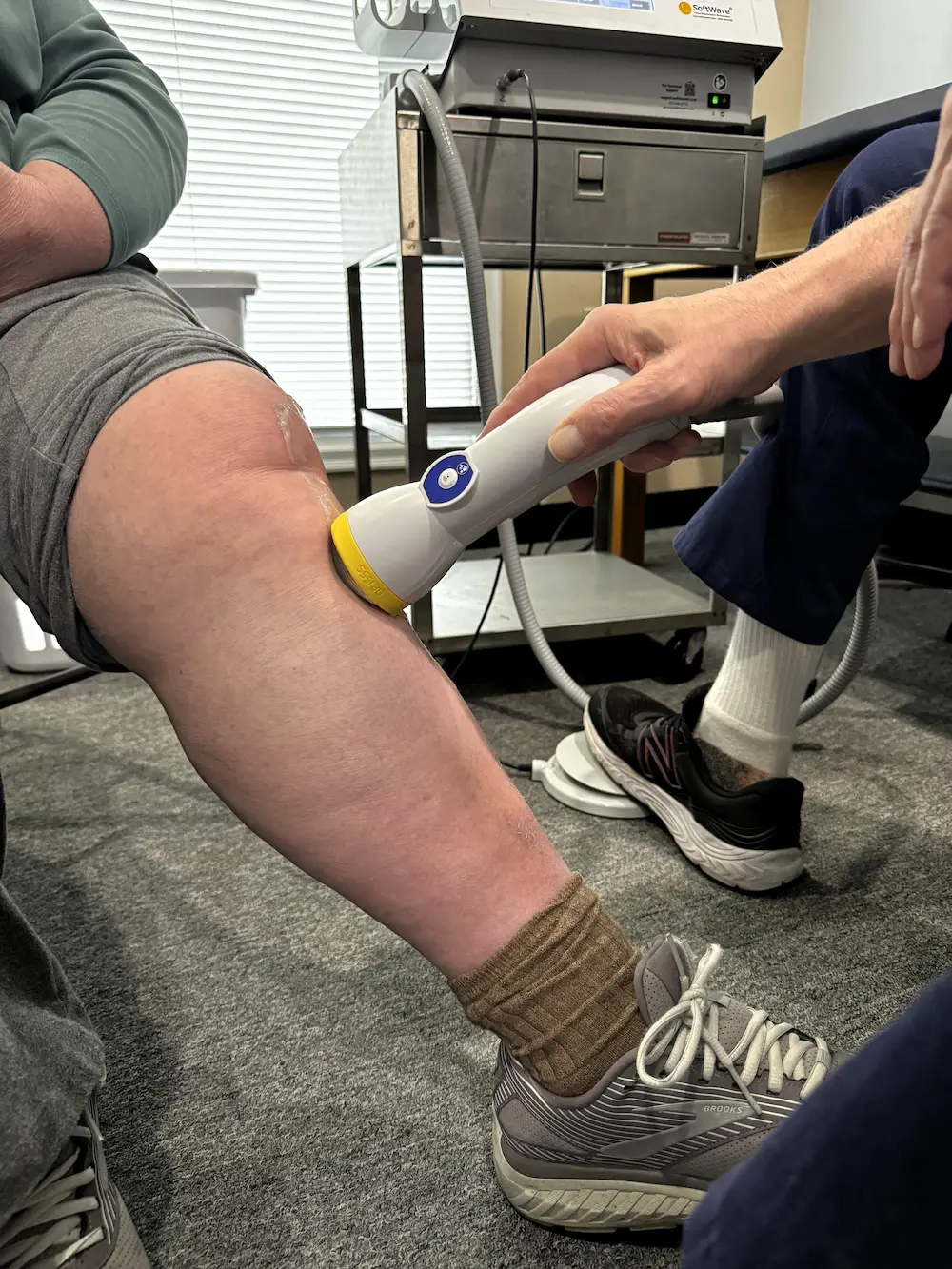
A session at Oyler Chiropractic starts with Dr. Oyler identifying the specific areas of the knee driving the pain. The SoftWave device is then applied directly to the skin over those areas using a gel, similar to an ultrasound. The applicator is moved across the treatment zone while the device delivers acoustic pulses into the tissue.
Most patients feel a mild pressure or tapping sensation. Some areas may be more sensitive depending on how inflamed the tissue is. Sessions typically run 10 to 15 minutes for the knee.
There’s no downtime. Most patients go about their normal activities immediately after. Some experience mild soreness for a day or two, which is a sign the tissue is responding.
How SoftWave Pairs with Chiropractic Care for Knee Pain
Knee pain rarely has a single source. In many cases, biomechanical problems in the hip, pelvis, or foot alter how load is distributed through the knee, accelerating wear and creating the conditions for chronic pain to develop.
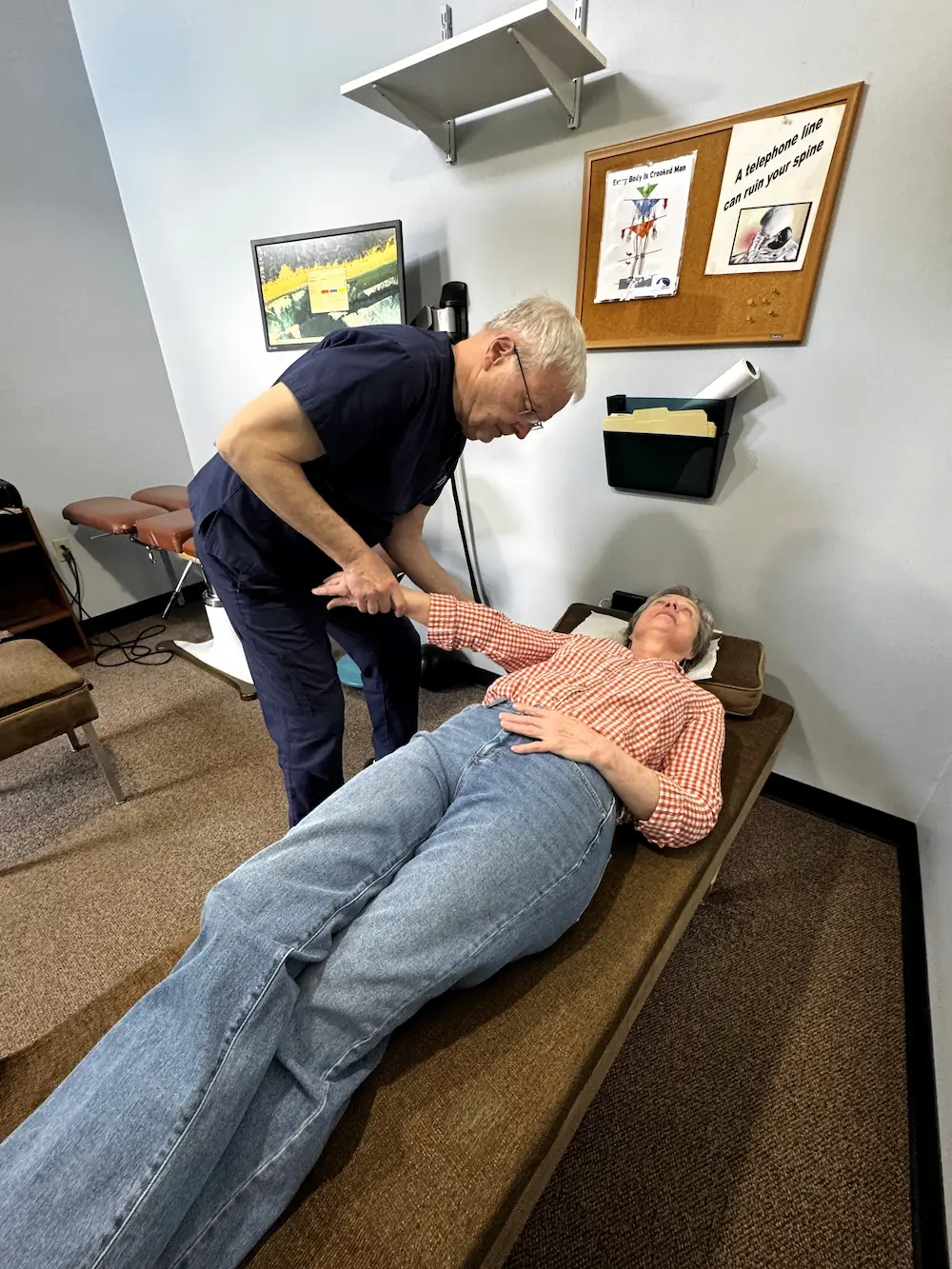
Dr. Oyler addresses both sides of this. SoftWave therapy handles the tissue damage directly. Chiropractic adjustments and extremity adjusting correct the underlying biomechanical contributors. Custom orthotics can reduce abnormal foot and ankle mechanics that feed into the knee over time.
This combination approach is why patients who have tried SoftWave or chiropractic in isolation elsewhere often get better results at Oyler Chiropractic. The tissue and the mechanics are addressed together.
Is SoftWave Therapy Right for Your Knee Pain?
If your knee pain has been present for months, has tried other treatments without lasting relief, or has been labeled as something you just have to manage, SoftWave therapy is worth a serious look before considering injections or surgery.
Dr. Oyler will evaluate your knee specifically and give you an honest assessment of whether SoftWave is the right next step for your situation. Reach out through our contact page to get started.