Table of Contents
Chiropractic care and massage therapy both relieve pain, but they work on different problems. Massage focuses on the soft tissue, easing tight muscles, tension, and stress. Chiropractic care focuses on the joints and how they move, correcting the mechanical issues that can cause pain in the first place. At Oyler Chiropractic in Reynoldsburg, the short version is this: if your problem is muscle tension, massage may be enough, but if a joint is not moving right, you likely need an adjustment.
Two Different Approaches to the Same Pain
It is easy to lump chiropractic care and massage therapy together, since both can leave you feeling better and both deal with the body’s aches and pains. The difference is what they actually target.
One works primarily on muscles and soft tissue. The other works primarily on joints and alignment. Understanding that difference is the key to knowing which one your problem calls for.
What Massage Therapy Does
Massage therapy works on the soft tissues of the body, including muscles, tendons, and the fascia that surrounds them. Through pressure and manipulation of that tissue, it can release tension, improve circulation, and help you relax.
For tight, overworked, or stressed muscles, massage can feel wonderful and provide real relief. It is also a helpful tool for general stress reduction and recovery. Where it stops short is the joints, since massage does not correct how a joint is moving.
What Chiropractic Care Does
Chiropractic care works on the joints, particularly the spine, and how they move. When a joint is restricted or not functioning properly, it can create pain, stiffness, and irritation of the surrounding nerves.
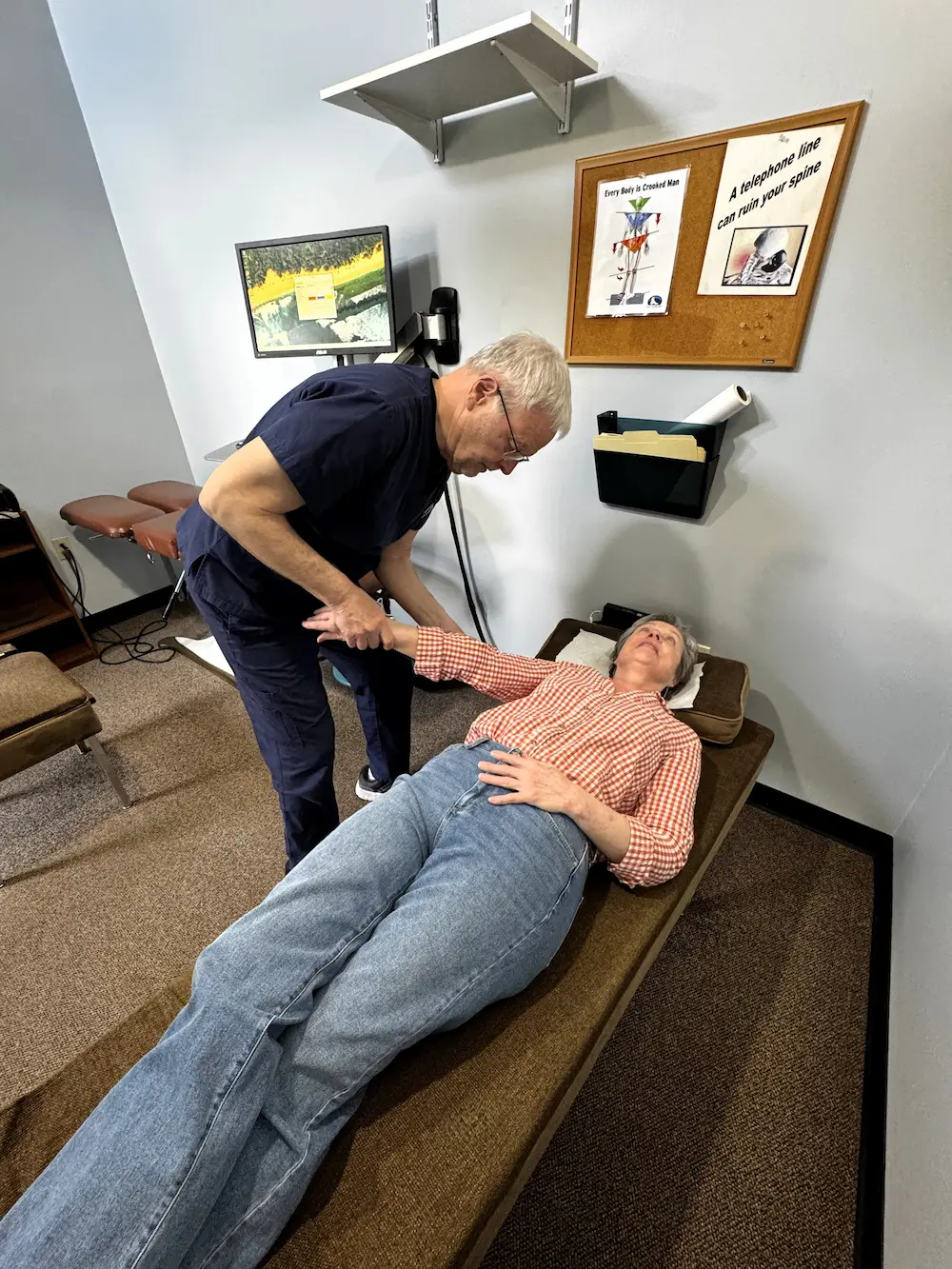
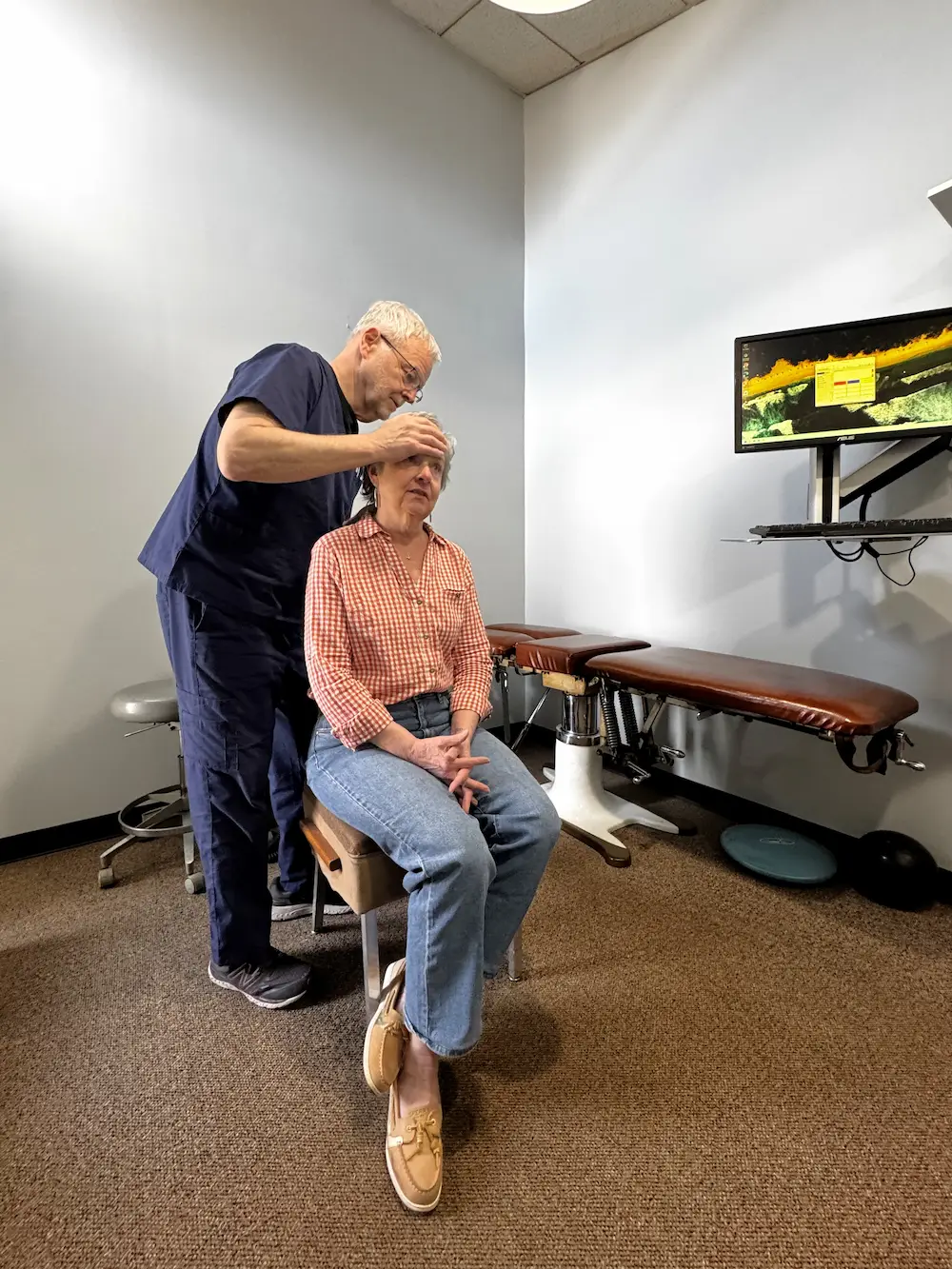
Using the Gonstead adjusting technique, Dr. Oyler identifies the specific joint that is the problem and adjusts it precisely. The goal is to restore normal motion so the underlying mechanical issue is addressed, not just the discomfort around it.
The Key Difference: Muscle vs. Joint
Here is the simplest way to think about it. If your pain comes mainly from tight, sore, or fatigued muscles, that is soft tissue, and massage is aimed right at it.
If your pain comes from a joint that is not moving correctly, a misaligned vertebra, or nerve irritation from a mechanical issue, that is a job for an adjustment. Massage might loosen the muscles around it and feel good temporarily, but it will not correct the joint itself.
The tricky part is that muscle and joint problems often feel similar, and they frequently occur together, which is why so many people are unsure which one they need.
When Massage Is the Better Fit
Massage may be the right choice when your main complaint is muscle tension, tightness, or stress. Sore muscles after a hard workout, tension from a stressful stretch of life, or general tightness across the shoulders and back all respond well to soft tissue work.
It is also a reasonable starting point when there is no sign of a joint or nerve problem, just muscles that need to release.
When Chiropractic Is the Better Fit
Chiropractic care tends to be the better fit when the problem points to the joints or nerves. Recurring neck pain and stiffness, back pain that keeps returning, headaches that come from the neck, or pain that radiates into an arm or leg all suggest a mechanical issue that an adjustment addresses.
If massage has helped you feel better for a day or two but the same pain keeps coming back, that pattern often means the underlying joint problem was never corrected.
Why They Often Work Well Together
These two are not rivals. In many cases they complement each other nicely. Loosening tight muscles with massage can make an adjustment easier and more comfortable, and correcting a joint can stop the muscle tension that kept building around it.
Plenty of people use both as part of taking care of their bodies. The point is not to pick a side permanently, but to match the treatment to what is actually going on at a given time.
A Common Mix-Up
One reason people reach for massage first is that muscle tension is easy to feel and easy to understand. A knot in the shoulder is obvious, while a restricted joint deeper down is not.
The problem is that muscles often tighten as a response to a joint that is not moving well. Relaxing the muscle helps for a while, but the tension returns because the joint underneath still has not changed. That cycle is a strong hint that an adjustment, not just more massage, is what the situation needs.
How to Decide Where to Start
If you are genuinely unsure, an exam is the fastest way to get clarity. During a first visit in Reynoldsburg, Dr. Oyler assesses whether your pain is coming from a joint, a nerve, the soft tissue, or a combination, and explains what he finds.
With more than four decades of experience, Dr. Oyler will tell you honestly if your issue is something an adjustment can help or if another approach makes more sense. That way you are spending time and money on the care that fits your problem.
What About Cost and Frequency?
Practical factors play a role too. Massage is often used on a regular, ongoing basis for maintenance and relaxation, and many people schedule it monthly or as needed. Chiropractic care is usually aimed at correcting a specific problem, so a plan may be more intensive at first and then taper as things improve.
Neither is automatically better value. The right choice comes down to what your body actually needs, not just what feels good in the moment.
Can Massage Make a Joint Problem Worse?
Massage is generally safe, but for a genuine joint or disc problem, it will not fix the underlying issue no matter how skilled the therapist. In some cases, repeatedly working the muscles around a joint that keeps flaring can give a false sense that things are improving while the real problem continues.
This is not a knock on massage. It simply is not the right tool for a mechanical joint issue, in the same way a great wrench will not help if what you needed was a screwdriver.
A Real-World Example
Picture someone with recurring neck tightness and occasional headaches. Massage loosens the neck and shoulders, and they feel great for a day or two. Then the tightness creeps back, along with the headaches.
That pattern often points to a joint in the neck that is not moving well, which keeps the muscles tightening as a response. In a case like that, an adjustment addresses the source, and massage can still play a supporting role in keeping the muscles relaxed.
Listen to the Pattern
One of the most telling clues is how your body responds over time. Relief that holds suggests the treatment matched the problem. Relief that fades within a day or two, again and again, suggests the real cause has not been addressed yet.
Paying attention to that pattern often points you toward the right kind of care, whether that is soft tissue work, an adjustment, or a combination of both.
If you are not sure whether you need an adjustment or a massage, we can help you figure it out. Contact Oyler Chiropractic in Reynoldsburg or call (614) 863-0111 to schedule a visit.