Table of Contents
Extremity adjusting is the assessment and adjustment of joints outside the spine, including the shoulders, elbows, wrists, hips, knees, ankles, and feet. When these joints are not moving correctly, they can cause pain, stiffness, and problems that a spine-only approach may miss. At Oyler Chiropractic in Reynoldsburg, Dr. Oyler uses extremity adjusting to treat joint pain throughout the body, and it is one of the main reasons patients find relief here after other treatments came up short.
Chiropractic Beyond the Spine
Most people think of chiropractic as strictly a spine and back treatment. The spine is central to the work, but the same principles apply to every movable joint in the body. When a joint is stuck, misaligned, or not tracking properly, it can create pain and limit how you move.
Extremity adjusting applies careful assessment and precise correction to those joints outside the spine. That includes the shoulders, elbows, wrists, hips, knees, ankles, and feet. The goal is the same as it is with the spine: restore proper motion so the joint and the tissue around it can work the way they should.
Training That Sets This Apart
Not every chiropractor is trained in detailed extremity work. Dr. Oyler trained under Dr. Mark Charrette, who is recognized internationally as a leader in extremity adjusting. That background is a real differentiator and shapes how joint problems are handled at the practice.
You can read more about that training and Dr. Oyler’s experience on the Meet Dr. Oyler page.
How Extremity Joints Cause Trouble
Joints are meant to move through a specific range. When one loses part of that motion, the surrounding muscles and tendons have to compensate, and nearby joints take on load they were not designed to carry.
Over time, that compensation shows up as pain, stiffness, or a nagging problem that will not resolve. Correcting the joint mechanics can take the strain off the tissue and restore more normal movement, which often breaks the cycle.
Knees, Elbows, and Feet
The knee is a common example. When the joint is not tracking well, it can irritate the tissue around it and contribute to knee pain that does not respond to rest alone. Restoring proper mechanics is often part of the answer.
The elbow is another. Conditions like tennis elbow involve irritated tendons, but the joint mechanics around the elbow and wrist matter too. Addressing both the tissue and the joint tends to work better than treating either alone.
The feet carry everything above them, and small problems there ripple upward. Poor foot and ankle mechanics can affect the knees, hips, and even the lower back, which is why the feet are often part of a bigger picture rather than an isolated complaint.
Signs Your Pain Might Be a Joint Problem
A few clues suggest the joint itself is involved rather than just the muscle or tendon. Pain that is worse with specific movements, stiffness after resting, a joint that feels like it catches or does not move smoothly, or discomfort that keeps returning to the same spot are all worth paying attention to.
None of these confirms a diagnosis on its own, but together they point toward taking a closer look at how the joint is moving. That is where a hands-on assessment earns its keep.
How This Pairs With Other Care
Extremity adjusting often works best alongside other treatment. When a joint has irritated or degenerated tissue, correcting the mechanics addresses one half of the problem while tissue-focused therapy addresses the other. The combination tends to hold up better than treating either piece on its own.
You can read more about the full scope of this work on our extremity adjustments page.
Patients Who Have Tried Everything
Many people who come in for joint pain have already tried rest, medication, therapy, or bracing without lasting results. A frequent reason is that the joint mechanics were never fully addressed, only the symptoms around them.
Dr. Oyler has spent more than four decades treating these kinds of cases in the Reynoldsburg area, and the extremity work is often what makes the difference for patients who felt out of options.
Shoulders and the Rotator Cuff
The shoulder is one of the most mobile joints in the body, which also makes it one of the most prone to problems. When the joint is not moving well, the muscles and tendons of the rotator cuff can get pinched or overworked, leading to pain, weakness, and a limited range of motion.
Extremity adjusting can help restore proper movement to the shoulder complex, taking pressure off the irritated tissue. For many shoulder cases, addressing the joint mechanics is the piece that other treatments left out.
Why Joint Problems Get Overlooked
A lot of extremity issues get treated as purely a tissue problem. The tendon is inflamed, so the focus goes entirely to calming the tendon, while the joint that is contributing to the irritation is never examined.
That is often why symptoms keep returning. If a joint is not tracking correctly, it will keep stressing the same tissue no matter how many times you calm the inflammation. Looking at how the joint actually moves fills in the missing piece.
Active Adults and Everyday Wear
You do not have to be an athlete to develop an extremity problem. Gardening, home projects, repetitive work tasks, and everyday activity all load the joints of the arms and legs over time. Small mechanical faults that go unaddressed can build into stubborn pain.
For people who want to stay active without a nagging joint holding them back, restoring proper joint motion is often the difference between working around a problem and actually moving past it.
What an Extremity Assessment Involves
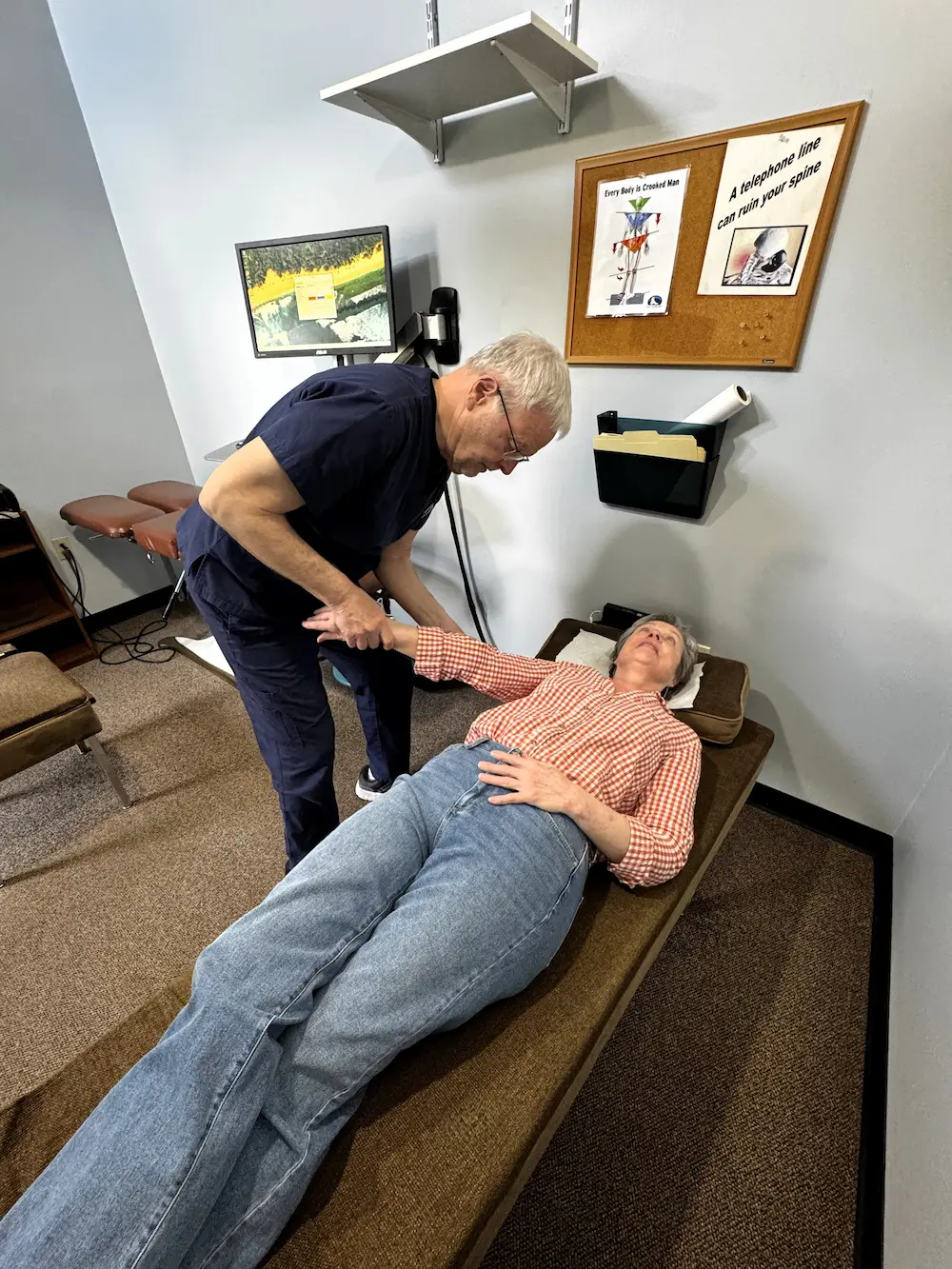
Assessing an extremity joint follows the same careful logic as a spinal exam. Dr. Oyler looks at how the joint moves, checks for restriction and tenderness, and compares it to how it should function. The history matters too, including what aggravates it and what you have already tried.
From there, the adjustment is specific to what the joint needs. The aim is to restore normal motion in a controlled, precise way rather than forcing the joint, and any accompanying tissue issue is factored into the plan.
Give It Time and the Right Approach
Joint problems that took months or years to develop rarely resolve in a single visit. Restoring proper mechanics is a process, and how quickly things improve depends on the joint, the tissue involved, and how long the problem has been present.
What helps most is matching the approach to the actual problem. When the joint mechanics and the surrounding tissue are both addressed, stubborn extremity pain often responds in a way it never did with symptom-only treatment.
If joint pain in a shoulder, knee, elbow, or foot has not improved, extremity adjusting may be worth exploring. Contact Oyler Chiropractic in Reynoldsburg or call (614) 863-0111 to schedule your first visit.