Table of Contents
Sciatica usually keeps coming back when the original source of the nerve irritation was never fully corrected. Pain relief and structural correction are not the same thing, so if a disc, joint, or muscle is still pressing on the sciatic nerve, the symptoms return once the inflammation settles and then flare again later. At Oyler Chiropractic in Reynoldsburg, the focus is on finding that underlying source instead of chasing the pain from one flare to the next.
What Sciatica Actually Is
Sciatica is not a diagnosis on its own. It describes a group of symptoms, including pain, tingling, burning, or numbness, that travels along the sciatic nerve from the lower back through the buttock and down the leg. The sciatic nerve is the largest nerve in the body, so when something irritates or compresses it, the discomfort can spread along its entire path.
Because sciatica is a symptom rather than the root problem, treating only the pain rarely holds. The nerve keeps getting irritated by whatever started the trouble in the first place, and the ache returns.
Why the Pain Keeps Returning
Most recurring sciatica follows a familiar pattern. The pain flares, you rest or take anti-inflammatories, the swelling calms down, and you feel better for a stretch of time. Then a long drive, a bad night of sleep, or one wrong movement brings it right back.
That cycle is a clue. It usually means the mechanical cause is still there. The inflammation was managed, but the structure driving it was never addressed.
Common drivers include a bulging or herniated disc pressing on a nerve root, a restricted joint in the lower back or pelvis, or tightness in the muscles the nerve passes through. Each of these needs a different response, which is one reason a one-size-fits-all approach so often fails.
The Source Matters More Than the Symptom
Two people can have nearly identical leg pain for completely different reasons. One might have a disc problem. The other might have a sacroiliac joint that is not moving the way it should. If both receive the same treatment, only one of them tends to improve.
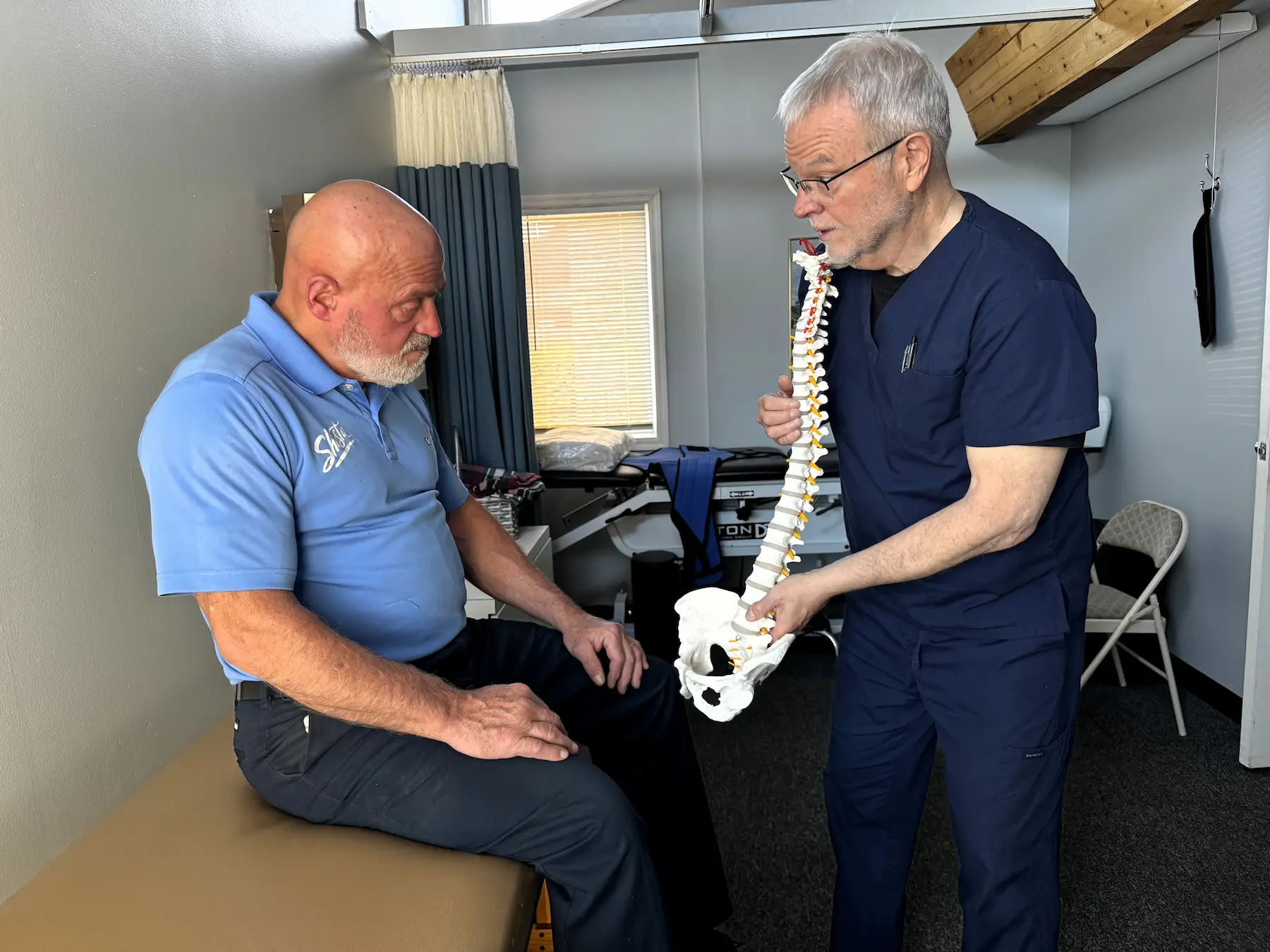
This is where a careful exam changes the picture. Before any treatment begins, Dr. Oyler works to identify where the irritation is actually coming from. That means checking how the spine and pelvis move, where the tenderness sits, and whether the pain pattern points toward a disc, a joint, or soft tissue.
The Gonstead adjusting technique is built around this kind of specificity. Rather than adjusting broad regions of the spine at once, the goal is to locate the exact level that is contributing to the problem and treat that with precision.
How Recurring Sciatica Is Handled in Reynoldsburg
When someone comes in with sciatica that keeps returning, the first step is listening to the full history. How long it has been going on, what makes it worse, what has already been tried, and whether the pain has changed over time all matter.
From there, the exam shows whether the problem is joint-related, disc-related, or a mix of both. For joint and pelvic involvement, precise adjustments can restore normal motion and take pressure off the irritated nerve. You can read more about the full approach on our sciatica treatment page.
With more than four decades of clinical experience, Dr. Oyler has seen many sciatica cases where earlier treatments only calmed the pain for a while without changing what was causing it.
When Spinal Decompression Makes Sense
If the exam and history point to a disc as the source, spinal decompression is often part of the plan. It uses gentle, controlled traction to reduce pressure inside the disc and ease the load on the nerve root.
For disc-related sciatica, this can be one of the more effective non-surgical options because it works on the actual pressure rather than only the pain signal. The number of sessions depends on the person and the severity of the disc issue, and Dr. Oyler recommends a specific plan after the exam rather than a fixed package for everyone.
Why “Just Rest” Often Backfires
Rest has its place in the first day or two of a bad flare, but too much of it can slow recovery. When the body stays still for long periods, the surrounding muscles weaken and stiffen, which can leave the nerve even more vulnerable the next time you move the wrong way.
Gentle, controlled movement usually helps more than lying flat for days. The trick is knowing which movements help and which ones aggravate the specific cause of your sciatica, and that comes from understanding the source.
Everyday Habits That Keep Sciatica Alive
Some of the most common triggers are things people do without thinking. Sitting for hours at a desk shortens the hip flexors and loads the lower back. Sleeping in a position that twists the spine can leave you stiff and sore by morning. Even carrying a heavy bag on one shoulder day after day can pull the pelvis out of balance.
None of these will cause sciatica on their own in a healthy back, but when there is already an irritated nerve or a joint that is not moving well, they keep the fire going. Part of lasting relief is spotting these patterns and adjusting them, which is something we work through during care.
What You Can Do Between Visits
A few small habits make a real difference when you are dealing with recurring sciatica. Try not to sit for long stretches without standing and moving. Pay attention to how you lift, keeping the load close to your body and letting your legs do the work.
These steps do not replace treatment, but they can reduce how often the pain flares while the underlying cause is being addressed.
When to Have It Checked
If your sciatica has returned more than once, that is worth taking seriously. Recurring nerve irritation tends to become more stubborn the longer it goes unaddressed, and the sooner the true source is identified, the more manageable it usually is.
If leg pain comes with progressive weakness, numbness that is spreading, or any loss of bladder or bowel control, seek medical care right away, since those symptoms can point to a more urgent problem.
Can Sciatica Go Away on Its Own?
Sometimes a first, mild episode of sciatica settles down within a few weeks as the inflammation calms. When that happens, it is easy to assume the problem is solved. The trouble is that a resolved flare and a corrected cause are not the same thing.
If the underlying disc or joint issue is still there, the nerve stays vulnerable, and the next flare is often a little worse or a little easier to trigger. That is the pattern we see most in patients whose sciatica has become a recurring visitor rather than a one-time event.
How Long Until It Starts to Improve?
There is no fixed timeline, because it depends on the source and how long the problem has been present. Joint-related sciatica sometimes responds fairly quickly once motion is restored, while disc-related cases treated with decompression tend to improve more gradually over a series of sessions.
What matters is direction. Dr. Oyler looks for steady, meaningful change rather than promising a specific date, and the plan is adjusted based on how you respond.
A Word on Pain Medication
Anti-inflammatories and pain relievers can take the edge off a bad flare, and there is nothing wrong with using them for short-term comfort. Just keep in mind that they work on the pain signal, not the cause. Leaning on them long term can hide a problem that is quietly continuing, which is why it helps to pair symptom relief with a plan that addresses the source.
If your sciatica keeps coming back and you want to understand why, we would be glad to take a look. Contact Oyler Chiropractic in Reynoldsburg or call (614) 863-0111 to schedule your first visit.