Table of Contents
Yes, a lot of headaches actually start in the neck rather than the head itself. When the joints, muscles, or nerves in the upper neck get irritated, they can send pain upward into the head, a pattern doctors call a cervicogenic headache. At Oyler Chiropractic in Reynoldsburg, OH, Dr. Oyler uses the precise Gonstead adjusting technique to find and address the neck problem driving that headache.
What Is a Cervicogenic Headache?
A cervicogenic headache is head pain that originates in the neck. The source is a problem in the cervical spine or surrounding tissue, even though you feel the ache in your head.
This type of headache is easy to miss because the pain shows up away from where it starts. People often treat the head and wonder why nothing helps, when the actual trigger sits lower down in the neck.
Cervicogenic, Migraine, or Tension Headache?
Headaches are not all the same, and telling them apart helps point to the right treatment. The three most common types each tend to behave a little differently.
A tension headache usually feels like a tight band of pressure around the head, often on both sides. A migraine tends to be more intense and can come with nausea, sensitivity to light or sound, and a throbbing quality.
A cervicogenic headache is different. The pain is typically one-sided, starts in the neck or base of the skull, and changes with neck movement or posture. If your headaches track with how your neck feels, that is a strong clue the neck is involved.
Signs Your Headache Might Be Coming From Your Neck
Cervicogenic headaches tend to follow a recognizable pattern. Spotting it can be the first clue that your neck is involved.
- Pain that often starts at the base of the skull and spreads toward the front of the head
- Headaches usually felt on one side
- Pain that worsens with certain neck movements or after holding one position too long
- Reduced range of motion or stiffness in the neck
- Discomfort that can reach into the shoulder or behind the eye
If that sounds familiar, your neck may be a bigger part of the story than you realized.
Why the Neck Can Cause Head Pain
The connection comes down to how the nerves in your upper neck are wired. The top cervical nerves share pathways with the nerves that supply sensation to your head and face.
When a joint or muscle in the upper neck is irritated, the brain can interpret those signals as pain in the head. That is why a problem in your neck can feel like a headache rather than neck pain, and why treating the head alone often falls short.
Common Reasons the Neck Gets Irritated
Modern daily life puts steady strain on the neck. Long hours at a desk, hunching over a phone, and poor sleeping positions all add up over time.
Old injuries play a role too. A previous whiplash, a fall, or even years of forward head posture can leave the upper neck joints moving poorly, which sets the stage for recurring headaches. Many of our patients in Reynoldsburg are surprised to learn their desk setup has been feeding the problem.
How Dr. Oyler Finds the Source
Pinpointing a cervicogenic headache takes a careful look at the neck, not a quick once-over. This is where the Gonstead adjusting technique stands apart from a general adjustment.
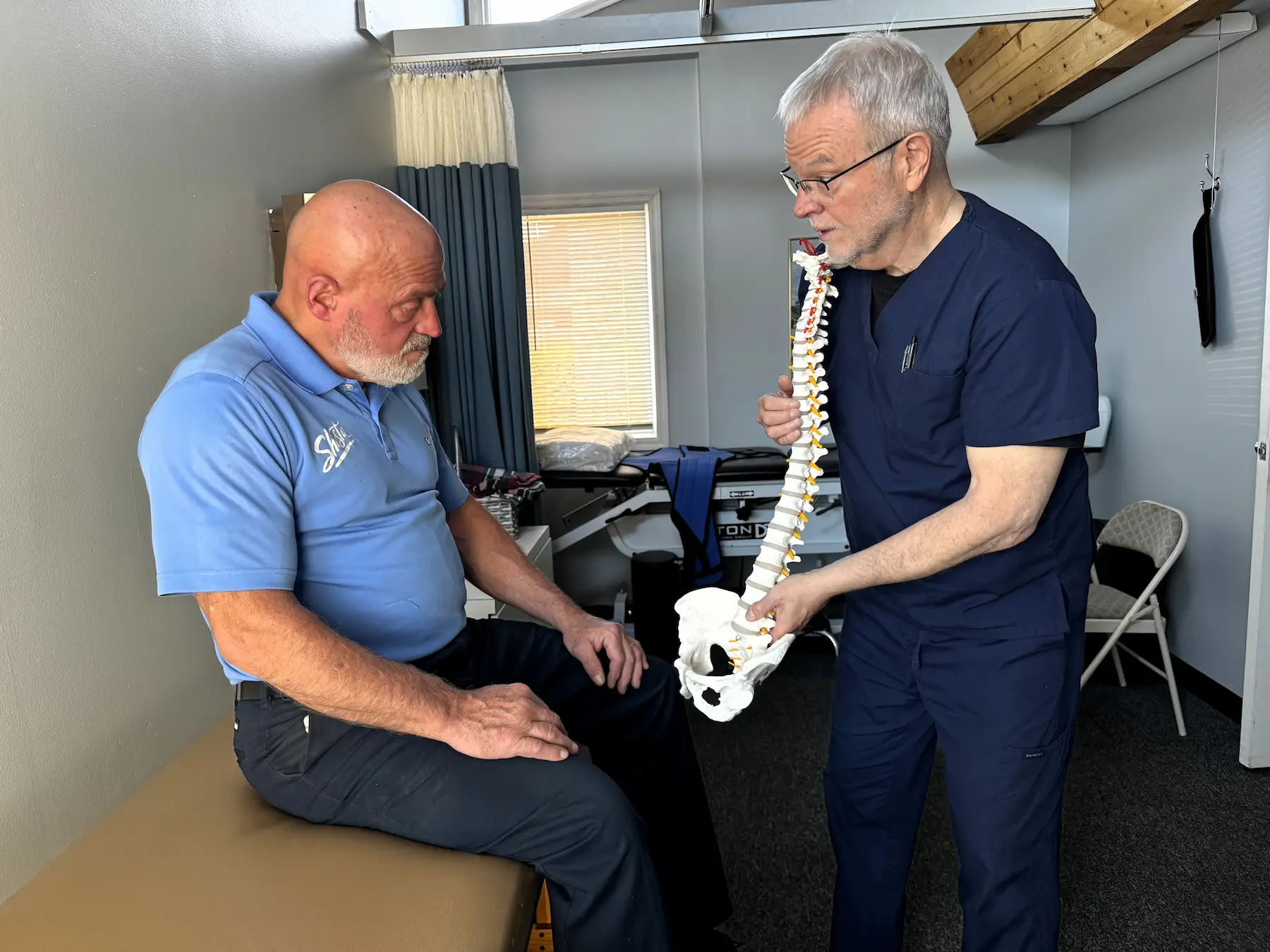
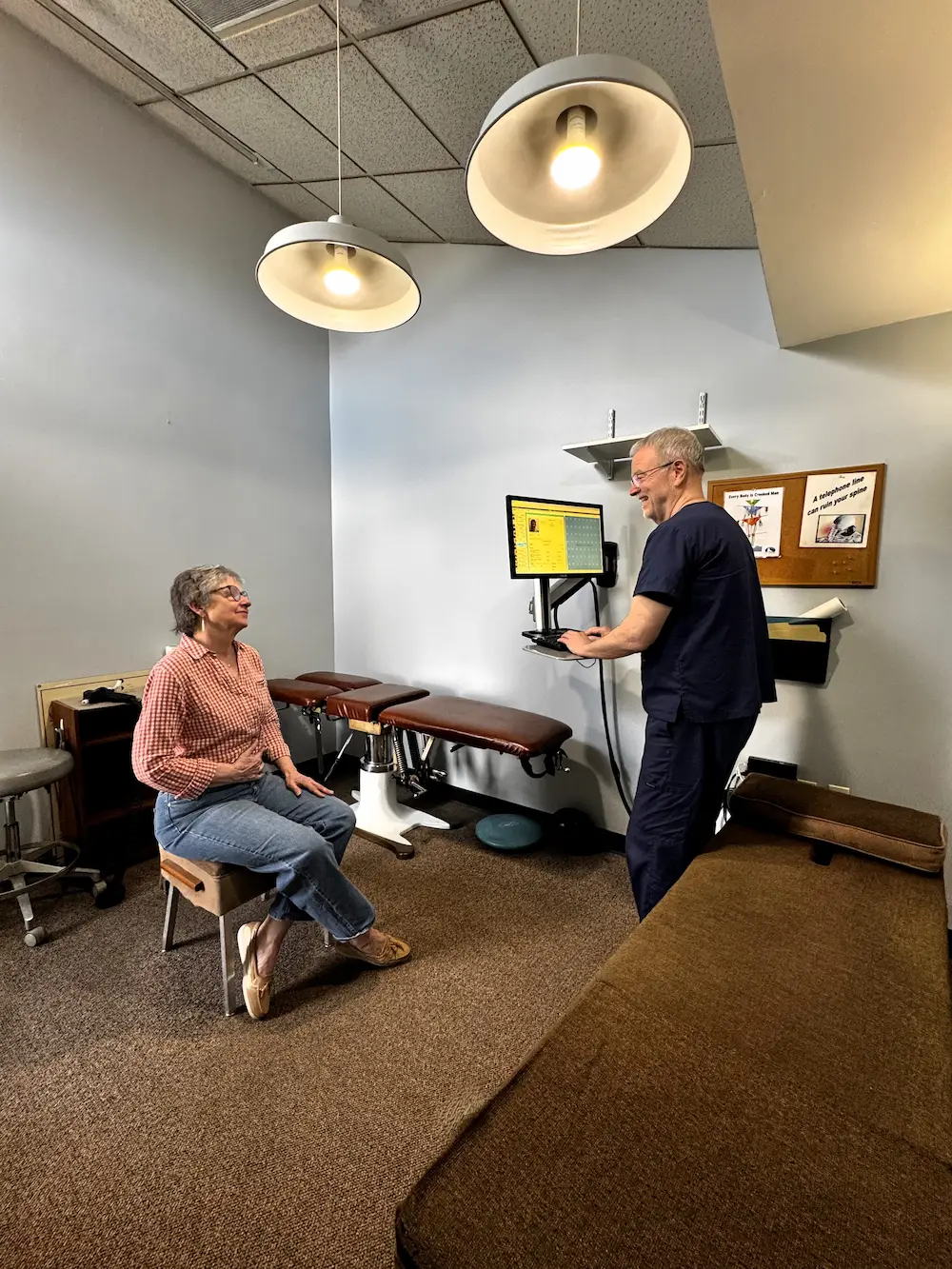
Dr. Oyler studies your posture and movement, feels along the spine for tenderness and abnormal tissue, and checks how each segment of the neck moves compared to the ones next to it. That analysis lets him identify the exact level that is irritated instead of treating the whole region and hoping for the best.
His training runs deep here. Dr. Oyler learned the Gonstead technique through an internship under Dr. Larry Troxell, who studied directly under Dr. Clarence Gonstead, the founder of the method. With more than 43 years in practice, he has applied that precision to a great many neck-related headaches.
How Treatment Helps
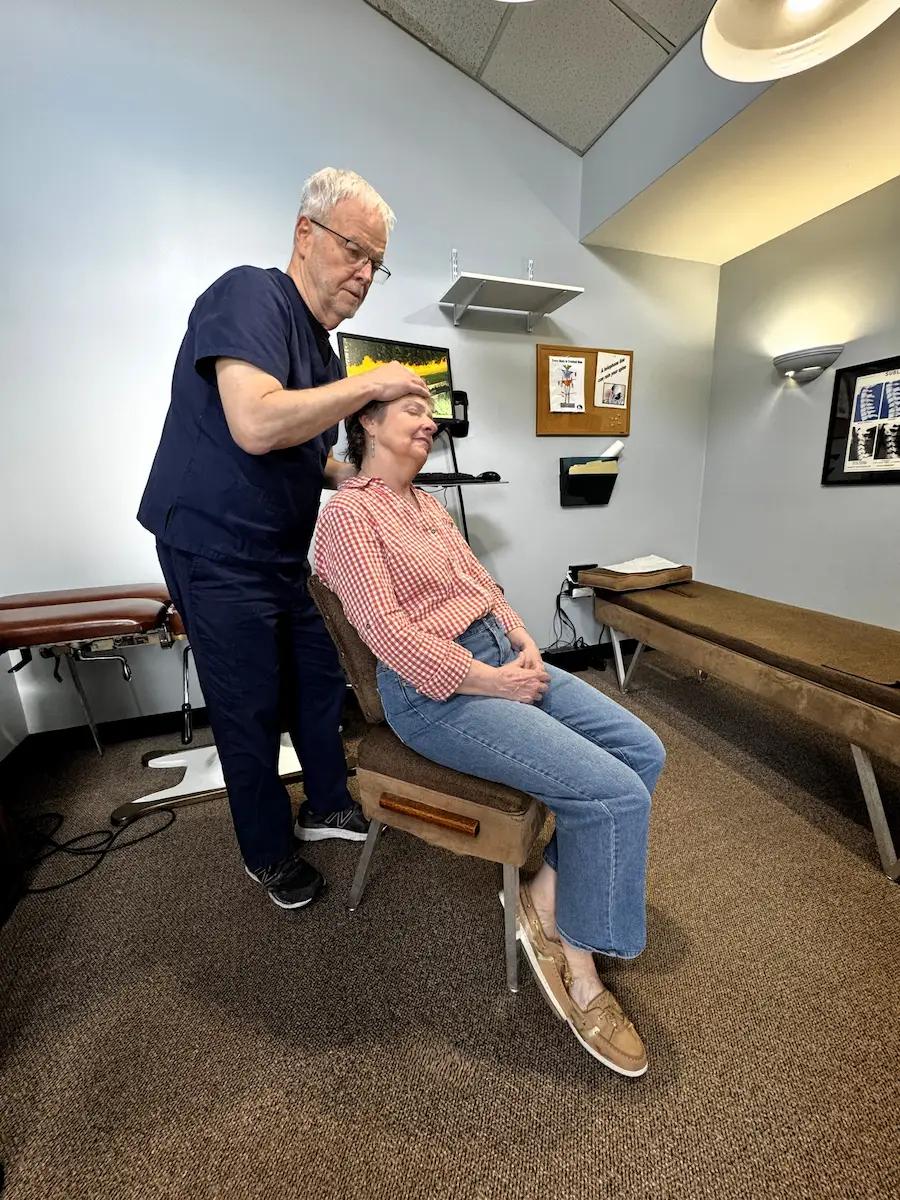
Once the problem level is identified, the adjustment is specific. The goal is to restore proper motion to the exact joint that is irritated, which can take pressure off the nerves involved.
When the neck issue improves, the referred head pain often eases along with it. Many people are relieved to find that addressing the neck finally changes a headache pattern they had lived with for a long time.
What You Can Do at Your Desk to Help
If your work keeps you at a screen, a few adjustments can take strain off your neck. Small changes add up over a full day.
- Set your monitor so the top of the screen sits at about eye level
- Keep your phone up near eye level instead of looking down at it
- Take short breaks to move and reset your posture every half hour or so
- Support your lower back so you are not slouching forward
- Avoid cradling a phone between your ear and shoulder
These habits will not undo a joint problem on their own, but they stop you from feeding it all day. Paired with care that addresses the underlying issue, they help the neck stay calmer.
Why Pain Relievers Eventually Stop Helping
Reaching for an over-the-counter pain reliever is a normal response, and it can take the edge off in the moment. The catch is that it does nothing about the irritated joint sending the signal.
Over time, leaning on medication can mask a problem that is quietly getting worse. Addressing the source tends to be a better long-term path than chasing each headache with another dose.
How Long Until Headaches Improve?
That depends on what is driving them and how long the neck has been irritated. Some people notice a shift fairly quickly, while longer-standing patterns take more time.
Dr. Oyler will give you a realistic sense of the timeline after his exam, rather than promising a set result. The aim is steady progress as the neck mechanics improve.
When You Should See a Doctor First
Not every headache comes from the neck, and a few warrant prompt medical attention. A sudden, severe headache unlike any you have had before, a headache with fever, vision changes, weakness, or confusion, or one that follows a significant head injury should be checked by a physician right away.
For the common, nagging headaches tied to neck tension and poor mechanics, a chiropractic evaluation is a reasonable next step. Dr. Oyler will let you know if he sees something outside his scope.
If neck-related headaches keep showing up in Reynoldsburg or a nearby community, we would be glad to take a look. Call Oyler Chiropractic at (614) 863-0111 or reach out here to schedule a visit.